FEATURED
YOUR EVERYDAY ESSENTIALS
ExPLORE
SUPPORT
DYE-FREE CLEANING
FEATURED
YOUR EVERYDAY ESSENTIALS
ExPLORE
SUPPORT
DYE-FREE CLEANING

Disinfecting wipes are a go-to for quick cleanups, but they’re not the right fit for every surface in your home. Here’s where to skip the wipes, and what to use instead to keep your surfaces clean without causing damage.
Generally, you can clean wood with a polyurethane finish with disinfecting wipes, but avoid wood with more delicate finishes, painted wood, and raw wood. Over time, disinfectants can strip the finish, leaving the wood underneath more susceptible to damage. For painted wood, using antibacterial wipes can dull and discolor the paint. Raw (unfinished) wood, on the other hand, is extremely absorbent, meaning it will soak up the disinfectant solution. This can dry out the wood and lead to cracking and warping.
So what should you use? Use a natural wood cleaner and a soft, reusable cleaning cloth instead.
Natural stone countertops, like granite, marble, or quartz, are often finished with a sealant that protects against stains and etching. But using disinfectant wipes on them isn’t a good idea. They can break down the sealant over time, leaving your countertops at risk of damage.
To clean stone countertops, opt for a pH-neutral stone cleaner or a mild dish soap, like Truly Free Home Dish Soap, and water—and be sure to rinse and dry thoroughly.
Harsh chemicals in disinfecting wipes can damage fabric fibers, causing fading or distorted colors, stains, and water rings. The same goes for leather. In addition to discoloration, antibacterial wipes can dry out leather, making it brittle and even lead to cracking.
What you use to clean fabric couches, chairs, and other upholstered furniture depends on the materials, so always check the tag first. Some fabrics require water-based cleaners, while others require solvent-based cleaners—and some can handle either. Truly Free Home Odor & Stain Eliminator is plant-powered and formulated to be gentle on fabrics, so it’s okay to use on most soft surfaces.
Leather also requires special care, and you have a few options for cleaning it. A mild, plant-based dish soap and water work well. So does a solution of equal parts water and vinegar. Of course, you can use a leather-specific cleaner, but some come with their own harsh chemicals you don’t want in your home, much less the furniture your family sits on.
Electronic screens like computer monitors, laptop screens, and TVs come with protective coatings that reduce glare and repel skin oils. Unfortunately, antibacterial wipes can strip these coatings, damage or discolor the screens, and leave behind sticky residue.
Instead, use a microfiber cloth dampened with distilled water for regular cleaning. For tougher spots, use a mixture of equal parts water and isopropyl alcohol. Either way, never spray or apply liquid directly to the screen, as it can drip to the edges and damage the device’s internal mechanics.
Disinfectant wipes often contain a class of toxic chemicals called quaternary ammonium compounds, also known as QACs or “quats.” These chemicals are effective at killing germs and bacteria, but are harsh on our systems and linked to negative health outcomes like skin irritation, asthma, and reproductive harm. Because quats linger on surfaces, using disinfecting wipes in food prep areas can lead to accidental ingestion of these harsh compounds.
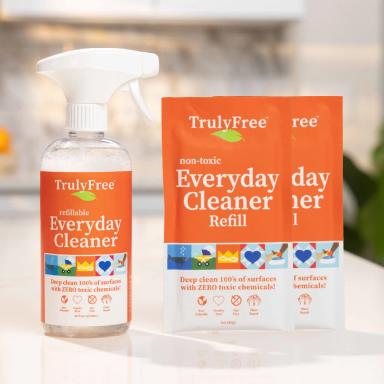
For kitchen countertops and other food prep surfaces, swap the wipes for Truly Free Home Everyday Cleaner. It’s plant-based and formulated without quats, ammonia, or added fragrance, so you can clean these surfaces without worry or harsh residue. For tips on how to properly clean a wood cutting board, check out our guide.
This seems like a given, but disinfectant wipes should never be used on your skin. Quats and other common ingredients like chlorine and alcohol strip the skin barrier and can cause irritation and dermatitis flare-ups, especially if you have skin sensitivities or allergies.
Instead, choose a mild, plant-based hand soap, like Truly Free Home Aloe Hand Soap, that naturally moisturizes while it cleans.
Though many people use disinfectant wipes for everyday cleaning, cleaning, sanitizing, and disinfecting are three different things. Here’s the breakdown of each.
Cleaning involves soap and water or a gentle multipurpose cleaner. It removes dirt, grime, and most germs, which is sufficient for most day-to-day needs.
Sanitizing reduces germs on a surface to levels considered safe by public health standards. Surfaces must be cleaned before they can be sanitized. For example, food-prep surfaces that have come into contact with raw meat should be sanitized.
Disinfecting destroys germs. Surfaces that come into contact with bodily fluids (like the floor when you’re potty training your toddler) should be disinfected.
In most cases, disinfecting isn’t necessary for daily cleaning. As a general rule, you should only disinfect surfaces when:
Of course, if disinfectant wipes aren’t used properly, they won’t disinfect at all. A disinfectant needs to sit on a surface for a specific period, known as the dwell time, to work effectively. To disinfect properly, follow the steps on the product label.