
FEATURED
YOUR EVERYDAY ESSENTIALS
ExPLORE
SUPPORT
DYE-FREE CLEANING
FEATURED
YOUR EVERYDAY ESSENTIALS
ExPLORE
SUPPORT
DYE-FREE CLEANING

The thinking goes that if a dishwasher detergent is sold in stores, it’s safe to use. But that’s not exactly true. Many popular brands contain harsh chemicals and additives that can harm your health and the environment. Here are the most common dishwasher soap ingredients to avoid.
Phosphates. Once a staple in dishwasher detergents, phosphates soften water and prevent mineral buildup on dishes. The good news is phosphates are banned or restricted in many states because of their environmental impact. When phosphates enter waterways, they fuel algal blooms that deplete oxygen and harm aquatic ecosystems.
Chlorine bleach. Used to sanitize and whiten, chlorine bleach can release fumes during the hot wash and dry cycles that irritate the lungs and eyes. (Think: that hot steam cloud that hits you when you open the dishwasher right after it’s done.) Chlorine residue left on dishes can also be ingested over time, which can be potentially damaging to your health.
Toxic fragrances. "Fragrance" on an ingredient label can represent dozens of undisclosed chemicals, some of which may be known endocrine disruptors. There's no functional reason for your dishwasher soap to be scented, so this one is easy to skip.
1,4-Dioxane. This is a byproduct of a manufacturing process called ethoxylation, not an intentionally added ingredient, which means it typically doesn’t show up on labels. However, the EPA classifies 1,4-Dioxane as a likely human carcinogen, and it's been found in a range of household cleaning products, including dishwasher detergents.
Formaldehyde and formaldehyde releasers. Used as a preservative in some detergent formulas, formaldehyde is a known carcinogen and respiratory irritant. It can be absorbed through the skin and inhaled as fumes during a hot dishwasher cycle.
Now that you know which dishwasher detergent ingredients to avoid and why, here are truly clean alternatives to look for. The more you know, the easier it is to make an informed decision that’s best for your family.
Sodium percarbonate. An oxygen-powered cleaning agent that releases hydrogen peroxide when dissolved in water, sodium percarbonate effectively lifts grease and food residue.
Bio-based enzymes (protease, amylase). These enzymes break down protein- and starch-based food residue at a molecular level. Even better? Protease and amylase work well even at lower temperatures and biodegrade after each wash cycle.
Sodium carbonate (washing soda). A mineral-based alkalizing agent that boosts cleaning power by breaking down grease and neutralizing acids, sodium carbonate is a natural ingredient that’s been used in cleaning for over a century.
Citric acid. A naturally derived ingredient that helps prevent water spots and film on glassware, citric acid also acts as a descaler, helping minimize mineral buildup in your dishwasher.
Coconut-derived surfactants. Plant-based alternatives to harsh surfactants like alcohol ethoxylates, coconut-derived surfactants cut through grease effectively without the toxicity concerns.
Unlike hand soap or laundry detergent, dishwasher soap residue can remain on surfaces that come into direct contact with your food. So you’re not just absorbing traces of harsh chemicals through skin contact; your family is eating and drinking off dishes that may still be coated in them. Over thousands of meals, that low-level exposure adds up, which is why choosing a cleaner formula is worth it.
Many conventional dishwasher pods also use PVA (polyvinyl alcohol) film as a wrapper. While PVA is designed to dissolve in water, it doesn't always break down completely and can leave microplastic residue on your dishes and in the water supply.
The idea of a plant-based dishwashing routine may seem daunting, but it doesn’t have to be. Start by swapping your detergent. Look for formulas that list every ingredient transparently and include cleaner alternatives. And, of course, skip detergents that include ingredients we flagged above.
Once you’ve switched to a truly clean dishwasher detergent, run a cleaning cycle with a plant-based dishwasher cleaner or a cup of white vinegar to clear out residue from your previous detergent. If you use a rinse aid, switch to a citric-acid-based formula.
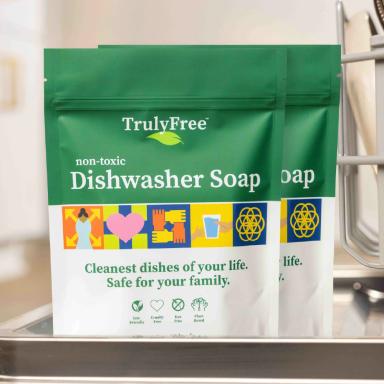
If you're looking for a cleaner dishwasher soap that checks these boxes, Truly Free Home Dishwasher Soap uses bio-based enzymes, sodium percarbonate, and coconut-derived surfactants with no harmful fragrances, phosphates, or chlorine bleach. It’s a better alternative for your dishes, your family, and your peace of mind.