FEATURED
YOUR EVERYDAY ESSENTIALS
ExPLORE
SUPPORT
DYE-FREE CLEANING
FEATURED
YOUR EVERYDAY ESSENTIALS
ExPLORE
SUPPORT
DYE-FREE CLEANING
If you’ve used laundry pods or laundry detergent sheets, you’ve encountered PVA, even if you didn’t realize it. Polyvinyl alcohol—also known as PVA—is a water-soluble, synthetic polymer that forms the dissolvable film around laundry and dishwasher pods. It’s also used in laundry detergent sheets, as a sizing agent in textiles, and as a paper coating to improve printability and water resistance.
If you’re thinking what “water-soluble polymer” means, it’s just a fancy way of saying PVA is designed to dissolve in water rather than breaking into microplastics.
That ability to dissolve completely while staying sturdy enough to hold other ingredients together makes it ideal for the outer film of laundry and dish detergent pods, which is likely where you’ve encountered PVA the most.
For manufacturers, PVA solves a big problem: how to deliver pre-measured detergent without heavy plastic bottles. Not only is polyvinyl alcohol lightweight, it’s cheap to produce, allowing brands to mass market those easy-to-use pods and sheets that practically sell themselves. The convenience factor is also undeniable. Toss a laundry pod into the washing machine or dishwasher, and you’re done (plus no mess!).
Sounds ideal enough, right?
It depends who you ask. Regulatory agencies like the EPA and FDA say yes. PVA is approved for use in food packaging and household products. Polyvinyl alcohol is water-soluble, rinses away cleanly, and isn’t known to cause skin irritation or allergic reactions in most people.
But “safe” and “harmless” aren’t always the same thing, especially when we’re talking about what happens after PVA goes down the drain, which is why environmental groups and some researchers are raising concerns about the ingredient.

This is where things get complicated. Laundry pod and laundry detergent sheet manufacturers, along with the American Cleaning Institute, maintain that PVA is biodegradable, breaks down in wastewater treatment facilities, and is better than the bulky, non-refillable plastic jugs traditional laundry detergents come in.
But recent independent research paints a different picture. A 2021 peer-reviewed study published in the International Journal of Environmental Research and Public Health examined what actually happens to PVA in U.S. wastewater treatment plants and found:
That’s a massive amount of petroleum-based polymer entering our soil and water.
And the question environmental groups like Beyond Plastics and the Plastic Pollution Coalition keep asking is: does dissolving really mean biodegrading, or are we just creating microplastics we can’t see? These organizations argue that PVA particles persist in the environment long after they’ve disappeared from view.
While the EPA maintains PVA’s “safe” status, several cities, including New York, have introduced bills to restrict or ban polyvinyl alcohol in cleaning products until more research is conducted.
At Truly Free Home, this kind of uncertainty is exactly what drives our ingredient decisions. We choose not to use polyvinyl alcohol because:
Truly Free Home cares about the safety of our customers and our planet. So when the science is still evolving, and the stakes involve our waterways and soil, we’d rather find a better solution.
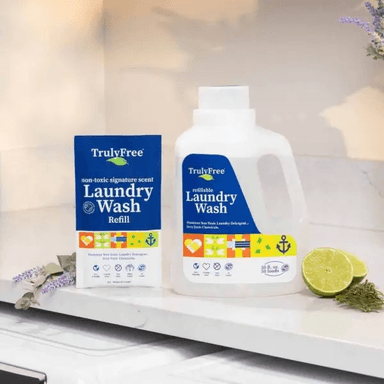
That’s why we created Truly Free Home Laundry Wash—a sustainable, non-toxic product that delivers powerful cleaning without the microplastics, harmful chemicals, or questionable environmental impact.
Our laundry wash is truly biodegradable, so it’s safe for septic systems and the environment, and doesn’t create unnecessary plastic waste. Plus, our formula is gentle on sensitive skin and free of harmful chemicals like chlorine bleach, phosphates, nonylphenol ethoxylate, and 1,4-dioxane.