
FEATURED
YOUR EVERYDAY ESSENTIALS
ExPLORE
NON-TOXIC CLEANING 101

Your Cart (0)
Your Cart (0)
FEATURED
YOUR EVERYDAY ESSENTIALS
ExPLORE
NON-TOXIC CLEANING 101
Most leggings and activewear are made of synthetic materials like polyester and spandex, which are more susceptible to high heat, friction, and detergent residues than natural fibers like cotton. So when you wash this type of clothing incorrectly, it degrades its sweat-wicking abilities, loses its elasticity, and becomes less breathable.
Using too much detergent. More does not always mean better. When it comes to washing activewear, that’s certainly true. Because of the tight-knit design of leggings and sportswear, excess detergent is difficult to rinse out. Once it’s trapped inside, it’s a magnet for sweat, body oils, and bacteria—all of which contribute to that musty smell activewear is known for.
Using fabric softener. Because fabric softener coats fabrics in silicone, it’s considered the enemy of athletic clothes. The waxy residue not only traps bacteria in the fibers, it eliminates any moisture-wicking capabilities, leaving your workout gear less breathable, harder to get clean, and, ultimately, stinkier.
Washing with hot water. High heat and activewear don’t mesh. In fact, washing leggings and other gear in hot water breaks down the stretchy elastane material, which can cause workout clothes to become misshapen or baggy.
Not turning clothes inside out. The inside of your activewear is right up against your skin, absorbing sweat, body oil, and skin cells during a workout. So if you don’t wash your workout clothes inside out, it’s harder for those materials to escape and your gear to get completely clean. Turning activewear inside out also helps protect logos and reduces excess friction.
Washing with other clothes. It’s okay to wash athletic clothes with delicates, but when they’re thrown in with heavier everyday items like jeans or towels, it creates added friction that can wear down materials more quickly and lead to pilling.
Washing activewear properly is important, but so is what you wash it with. Conventional laundry detergents often include ingredients that aren’t great for the longevity of your workout clothes or your health. Think optical brighteners that bind to fabrics, harsh fragrance chemicals that mask odors and can trigger allergies, sodium lauryl sulfate (SLS) that can cause skin irritation, and bleach that breaks down elasticity and is highly toxic.
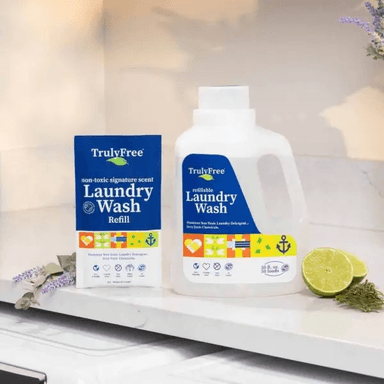
The best way to ensure the laundry detergent you’re using won’t slowly degrade your expensive activewear? Choose a non-toxic, gentle detergent for athletic wear that’s residue-free and doesn’t include the aforementioned ingredients, like Truly Free Home Unscented Laundry Wash. Our detergent is safe for sports bras, leggings, bike shorts—whatever workout gear you love wearing—because it’s crafted with plant-powered ingredients that rinse clean.
For extra sweaty loads, pair Laundry Wash with our Enzyme Stain Remover. It combines lipase and protease enzymes that specifically target body oil and sweat proteins, so your clothes come out fresh and odor-free.

Now that you know what not to do and the right products to use, here’s how to wash activewear so it’s around for all your future walks, jogs, box jumps, and downward dogs.
The right pre-wash prep techniques will ensure your activewear maintains its shape and gets thoroughly clean. Here’s what to do to prep your athletic clothes for the wash.
Presoak. If you have particularly smelly workout clothes, give them a good soak to start breaking down odor-causing germs before throwing them in the wash. Fill your sink with warm water, add 4 caps of vinegar, and let your activewear soak for 15 to 30 minutes.
Treat stains. Tackle days-old stains with Truly Free Non-Toxic Stain Spray, an activewear-friendly spray that tackles tough stains while prioritizing safety and effectiveness.
Turn clothes inside out. After you presoak and treat stains, turn your workout clothes inside out. This is key to preserving the elasticity and keeping them from stretching out in the wash.
Wash separately. Sweat-infused leggings and sports bras have no business being washed with your other laundry. Be sure to wash them separately and in smaller loads so they get fully clean.
Now that you’re ready to toss your activewear in the washing machine, the next step is to choose the right settings and products.
Washer settings. Workout clothes should always be washed on a cold cycle on gentle. Hot water can break down material fibers, causing leggings to wear out more quickly.
Avoid scented products. Conventional fragranced detergents often contain toxic chemicals that can trigger skin irritation and allergies. Not only that, these ingredients trap oils and bacteria, making it difficult to remove odors.
Use a gentle, non-toxic detergent. Everyday detergents include harmful optical brighteners, phthalates, and dyes that damage activewear fibers and put your health at risk. Instead, opt for Truly Free Unscented Laundry Wash. Our non-toxic laundry soap is safe for activewear because it relies on patented, plant-based chemistry to tackle sweat, odors, and stains without leaving behind residue.
Avoid using too much detergent. In an effort to stamp out the stink, you might be tempted to go overboard with the laundry detergent. This is a mistake. When you add too much detergent, it doesn’t totally rinse out of your clothes and ends up doing the opposite of what you intended—trapping odors.
Use a laundry booster. For particularly sweat-soiled activewear, add a non-toxic laundry booster, like Truly Free Enzyme Stain Remover, to the load. Natural enzymes in our formula are designed to eliminate body oil and sweat so your workout outfits are as fresh as the day you bought them.
While most activewear is safe to machine wash, hand washing is the best way to keep them newer for longer. Plus, if you only have two or three pairs of leggings to clean, hand washing lets you cut back on the amount of water and other resources you’re using. To hand wash your activewear, fill a sink or tub with cool water, add detergent, and use your hands to distribute the soap. Soak for 30 minutes before rinsing in cool water until all detergent is gone. Gently squeeze clothing to remove excess water and hang to dry. Avoid wringing to remove water, as this can stretch the material.
There are also critical dos and don'ts when it comes to drying athletic clothes. Here’s how to dry and store activewear correctly.
Air dry. Drying on high heat or in direct sunlight degrades fibers, reduces elasticity, and breaks down the moisture-wicking and quick-drying qualities of the performance materials. Instead, hang activewear to dry on a drying rack or flat on a table outside of direct sunlight.
Machine dry. Only use the dryer if you absolutely have to. If you’re in a time crunch, throw your leggings in on the low- or no-heat setting for 15 minutes at a time until dry.
Storage tips. Always make sure your workout clothes are completely dry before storing them so they don’t become a breeding ground for bacteria and mildew. And always fold activewear and store it in a drawer rather than hanging. Hanging items like sports bras and leggings can stretch them out.
