FEATURED
YOUR EVERYDAY ESSENTIALS
ExPLORE
SUPPORT
DYE-FREE CLEANING
FEATURED
YOUR EVERYDAY ESSENTIALS
ExPLORE
SUPPORT
DYE-FREE CLEANING
A plastic-free dishwashing routine is totally doable—and it’s an easy way to lessen your carbon footprint. Here’s how.
If you have a dishwasher, let it do the heavy lifting. According to the United States Geological Survey (USGS), washing your dishes by hand can use between nine and 27 gallons of water. Modern dishwashers, on the other hand—especially ENERGY STAR-certified models—can save an average of 3,870 gallons of water over their lifetime. In fact, even running a load with as few as eight dishes can actually save water compared to hand washing. That said, running the dishwasher with full loads is still the most efficient way to use it.
Quick Tips:
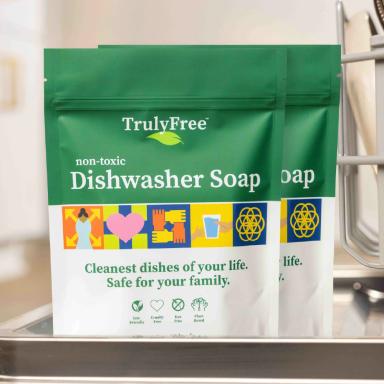
When choosing a plastic-free dishwasher detergent, look for tablets or powder, like Truly Free Home Dishwasher Soap. Keep in mind, some dishwasher pods use polyvinyl alcohol (PVA) film, a plastic polymer, which may not fully dissolve in all wastewater systems.
Other ingredients to avoid? Chlorine bleach, harsh fragrances, phosphates, nonylphenol ethoxylate, and 1,4-dioxane, to name a few.
If you don’t have a dishwasher or need to hand wash items that aren’t dishwasher-safe (like your favorite pan, delicate sippy cups, and that one lunchbox lid), make a sink bath instead of letting the tap run while you wash.
Here’s how: Fill the sink (or a basin inside it) with warm water and a few drops of plant-based dish soap. Put your dirty dishes in the soapy water, washing from least dirty to most dirty, rinsing each quickly so you don’t let the water run the entire time.
Pro mom move: Teach your kids to scrape their plates right after using them. Dried-on food means more scrubbing, soap, and water to clean them.

What you wash with matters. The chemicals in many traditional dish soaps (think harsh fragrances, phthalates, polyvinyl alcohol, dyes, and artificial colors) can take a toll on both the health of your family and the planet. When you use toxic dish soaps to wash your dishes, these harmful ingredients don’t just disappear down the drain; they can irritate skin, trigger headaches, and make their way into rivers, lakes, and oceans, where they linger and can harm aquatic life.
Truly clean substitutes, like Truly Free Home Refillable Dish Soap, are powered by plant-based, biodegradable ingredients that break down tough food and grease with ease, yet are family- and environment-friendly.
After switching to an plant-based dish soap, be mindful of how much you use. More soap doesn’t mean cleaner dishes, so only reapply soap when all the suds are gone. Using less stretches the life of your bottle and your budget while minimizing waste.
Bonus points if you choose brands that prioritize low-waste packaging like paper, aluminum, or refillable bottles—instead of relying on single-use plastic.
That neon-colored sponge or standard dishbrush sitting by your sink? It’s likely made of single-use plastic, which has a recycling rate of less than nine percent. Plastic sponges alone release microplastics into your water—and onto your dishes—every time you use them. Kitchen sponges also harbor bacteria and need to be replaced every week, so they contribute even more plastic waste to landfills. Better options for busy parents include:
Whatever you choose, keep two on rotation so one can dry fully between uses.
Take your plastic-free efforts one step further by extending them beyond washing. When drying your dishes, try swapping plastic drying racks for stainless steel or bamboo ones, paper towels for washable cotton or linen towels, and microfiber cloths (which are plastic-based) for cotton, linen, or hemp alternatives.
And you can’t go wrong with air-drying dishes—it’s an easy win that saves energy and eliminates an extra step in your routine. One or two bamboo racks or a stone dish pad make air drying a breeze, even if your counter space is tight.
As insignificant as your daily dishwashing routine might seem, it’s the little changes you make that add up to a big impact on reducing plastic waste and pollution. Start with one or two mindful choices, like using a plant-based powder dishwasher detergent, opting for a plant-based soap in low-waste packaging, or reaching for natural fiber sponges and brushes.
Before you know it, your dishwashing routine will be pulling double duty: keeping your kitchen tidy while building a sustainable habit you can feel good about.