FEATURED
YOUR EVERYDAY ESSENTIALS
ExPLORE
SUPPORT
DYE-FREE CLEANING
FEATURED
YOUR EVERYDAY ESSENTIALS
ExPLORE
SUPPORT
DYE-FREE CLEANING
If you’ve ever pulled a “clean” plate from the cabinet and noticed a weird film, faint scent, or tasted a hint of soap while eating, that’s dish soap residue. There are a handful of reasons dish soap residue happens.
You can’t always see dish soap residue once dishes dry—but it’s still there. And when you reheat leftovers on a plate with residue, those harmful leftover chemicals can mix into your food.
A single meal off a soapy plate isn’t worth panicking over. The concern is chronic, low-level exposure from ingredients that are increasingly linked to hormone disruption and other health issues.
Your endocrine system is your body’s hormone messaging network. Certain chemicals—known endocrine-disrupting chemicals (EDCs)—can interfere with that network even at low doses, especially during pregnancy, infancy, and childhood.
The National Institute of Environmental Health Sciences notes that EDCs can “interfere with the body’s endocrine system and produce adverse developmental, reproductive, neurological, and immune effects” and that many everyday products (including cleaners and plastics) contain them. The Endocrine Society agrees, pointing to links between EDC exposure and issues like reproductive problems, certain cancers, and metabolic disease.
Common EDC families found in household products include phthalates and certain fragrances, harsh surfactants, and some preservatives—many of the same categories that show up in conventional dish soaps. When those ingredients linger on dishes, you’re creating one more (totally avoidable) way for EDCs to get into your family’s bodies.

So, how do you avoid common endocrine-disrupting and other harmful chemicals in your dish soap? Here’s a quick label-decoding guide.
Phthalates are plasticizers and solvent-like chemicals often used in fragrance blends to make scent last longer. They usually won’t appear as “phthalates” on the label—just as “fragrance” or “parfum.”
Research by NIEHS and the EPA has linked prenatal and early-life exposure to phthalates with altered reproductive development, neurodevelopmental changes, and other hormone-related effects.
What to skip on labels:
Instead, look for fragrance-free formulas or dish soaps scented with essential oils or other plant extracts.
The bright blue or neon green color we’ve come to associate with dish soaps doesn’t help clean your dishes; it’s there for aesthetics. They aren’t harmless, either. Synthetic dyes are typically petroleum-derived, and some classes of colorants have raised questions about allergenic potential and, in other uses, possible carcinogenic contaminants.
Because dyes are not necessary for cleaning and can add to your overall toxic chemical load, it’s best to avoid them entirely—especially in products that directly contact food surfaces.
What to skip on labels:
Sodium Laureth Sulfate (SLES) and other ethoxylated surfactants can carry trace amounts of 1,4-dioxane from the manufacturing process. Here’s the problem. Not only is SLES a synthetic sulfate linked to skin irritation, dryness, and allergic reactions, the EPA considers 1,4-dioxane a likely human carcinogen. Even short-term exposure to 1,4-dioxane is linked to vertigo, drowsiness, and nose and throat irritation.
What to skip on labels:
To keep bacteria from growing in water-based formulas, brands sometimes add preservatives to dish soap formulas. Sounds innocent, right? The issue is some preservatives slowly release formaldehyde.
Formaldehyde is classified as a known human carcinogen and is linked to myeloid leukemia and cancers of the nasal passages and upper throat in highly exposed workers. The American Cancer Society also notes that higher-level exposures can increase the risk of certain leukemias and rare nasal/nasopharyngeal cancers.
Given that most families already face multiple small exposures via building materials, air pollution, and personal care products, leaving formaldehyde-releasing preservatives off your dishes is an easy way to reduce your cumulative risk.
What to skip on labels:
Diethanolamine (DEA), monoethanolamine (MEA), and triethanolamine (TEA) are harsh ingredients often used to boost foaming power and adjust pH.
These chemicals can also be skin and eye irritants, and in the presence of certain other chemicals (like nitrites), ethanolamines can form nitrosamines, a class of compounds where several members are considered possible or probable human carcinogens.
What to skip on labels:

Once you know what to avoid, it’s easier to choose a dish soap you feel good about using in your home. Here’s what to look for in an ingredient-conscious dish soap:
For an extra layer of assurance, some people also look for third-party standards like EPA Safer Choice that screen for known carcinogens and strong endocrine disruptors in cleaning products.
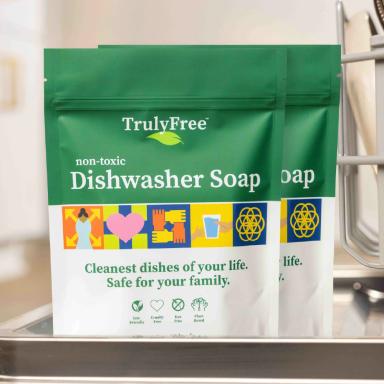
If you’re looking for a dish soap that doesn’t leave behind toxic residue, Truly Free Home Dish Soap was formulated exactly for that peace of mind.
Here’s why our dish soap is a gentle, better choice for your family:
You can’t control what’s in the air outside your home, but you can control what’s on the dishes your family eats from every day. Choosing a residue-free dish soap is one simple, powerful way to lower your household’s exposure to endocrine disruptors, probable carcinogens like 1,4-dioxane, and formaldehyde-releasing preservatives—all while getting a sink full of truly clean dishes.