FEATURED
YOUR EVERYDAY ESSENTIALS
ExPLORE
SUPPORT
DYE-FREE CLEANING
FEATURED
YOUR EVERYDAY ESSENTIALS
ExPLORE
SUPPORT
DYE-FREE CLEANING
Your skin has a natural lipid barrier, aka a thin layer of oils that keeps moisture in and irritants out. When you wash dishes with conventional dish soap, the harsh surfactants in the formula don't distinguish between the grease on your pan and the oils on your hands, so they strip both.
The most common surfactant in conventional dish soaps is sodium lauryl sulfate (SLS). It's cheap, effective, and produces the foamy lather people associate with cleaning power. But SLS is also a well-documented skin irritant. Research shows that regular contact with SLS causes skin irritation, and the irritation only subsides once exposure stops. In fact, SLS is such a well-known irritant that it's actually used as a positive control in dermatological testing, meaning when researchers need a substance they know will irritate skin, SLS is the standard.
Harsh fragrances in many dish soaps add another layer of potential irritation. "Fragrance" on a label can represent dozens of undisclosed chemicals, some of which are known allergens and endocrine disruptors. When your skin barrier is already compromised from harsh surfactants like SLS, irritating fragrance chemicals can more easily cause flare-ups and redness.
Hot water only makes matters worse. The warmer the water, the more effectively it strips oils from your skin. Combine hot water with an aggressive surfactant and harsh fragrance, and you've got a recipe for chronically dry, irritated hands.
It may seem like dry hands after washing the dishes are inevitable, but there are a few changes you can make to reduce the intensity. Here’s how to protect your hands while washing the dishes.
Switch your dish soap. Look for a dish soap that uses plant-derived surfactants instead of SLS. Coconut-based surfactants like coco-betaine and sodium cocoate are effective grease cutters that are significantly gentler on skin. And skip the harsh fragrances and artificial dyes, both of which are common irritation triggers that serve no cleaning purpose.
Wear gloves when you can. A pair of rubber gloves is the simplest way to keep dish soap off your skin entirely. If your hands sweat inside gloves, try wearing thin cotton liners underneath.
Use warm water, not hot. Warm water cleans dishes just as effectively as hot water without stripping your skin as aggressively. Save the hot water for sanitizing cutting boards and heavily soiled cookware.
Moisturize right after. Pat your hands dry (don't rub) and apply a fragrance-free hand cream while your skin is still slightly damp. This helps lock in moisture and rebuild the lipid barrier.
Use less soap. Most people use far more dish soap than they need. A few drops of a concentrated formula are plenty for a full sink of dishes.
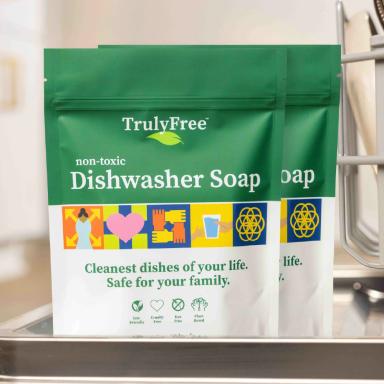
If you're looking for a dish soap that's tough on grease, but won’t dry out your hands, Truly Free Home Dish Soap uses coconut-derived surfactants and limonene from citrus peel to cut through food and grease naturally. Our formula also doesn’t include SLS, harsh fragrance, or artificial dyes. And since it’s concentrated, a few drops go a long way.