
FEATURED
YOUR EVERYDAY ESSENTIALS
ExPLORE
NON-TOXIC CLEANING 101
Your Cart (0)
Your Cart (0)
FEATURED
YOUR EVERYDAY ESSENTIALS
ExPLORE
NON-TOXIC CLEANING 101
Cloth diapers are some of the most heavily soiled laundry a washing machine will ever see. That’s because urine, feces, and bacteria don't just sit on top of the fabric—they work their way deep into the fibers. So if your laundry routine isn't up to the task, all that residue stays behind.
And residue buildup has consequences.
Skin sensitivity. Baby skin is significantly thinner and more permeable than adult skin, which makes it far more reactive to what's sitting against it. Diaper rash affects nearly all infants at some point, and one contributing factor is the interaction of urine with bacteria on the skin that produces ammonia, which can be caustic to the diaper area and cause burns. If a rash appears as flat, red, and blotchy rather than bumpy or rashy-looking, ammonia or detergent residue is often the culprit.
Diaper lifespan. Ammonia doesn't just irritate skin; it damages fabric. Even low levels of ammonia deteriorate natural fibers like cotton, bamboo, and hemp, starting as small holes that increase in size over time with wear and laundering. A proper wash routine protects your investment.
Ammonia buildup. When urine sits in a warm, moist environment—like a diaper pail—urea breaks down quickly into ammonia, creating that strong, unmistakable smell. Left unchecked, that buildup compounds with every wash, making diapers harder to clean and more irritating against your baby's skin.
The good news is that all of this is completely preventable with the right laundry detergent and washing routine.
Choosing a laundry detergent that’s safe for cloth diapers is one of the most important decisions in your washing routine—and it's also one of the most misunderstood. "Baby" detergents aren't automatically the right choice, and neither are heavily marketed "gentle" formulas. What actually matters is what's in (and more importantly, what's not in) the formula.
A good laundry detergent for cloth diapers needs to be genuinely powerful. Diapers are heavily soiled laundry, and a formula with a strong blend of surfactants (the cleaning agents that lift waste from fabric) and enzymes (which break down proteins, fats, and starches) is essential. It also needs to be clean rinsing, so at the end of the wash cycle, nothing is left behind on the fabric.
There are three ingredients commonly found in detergents that are added specifically to not rinse out in the final rinse: harsh fragrance, fabric softener, and optical brighteners. The molecules in these compounds need to attach to fabric fibers to do their respective jobs—whether that’s leaving a scent, giving the feeling of softness, or reflecting light to make diapers look clean. The problem is those lingering ingredients give the ammonia and bacteria in urine something to bind to, making it harder and harder to wash out in future washes.
Here's a closer look at each:
Harsh Fragrance. Most fragranced detergents hide a number of harsh chemicals—including phthalates—behind the term “fragrance”. That’s because companies aren’t required to disclose that type of proprietary information. The result? Scents that don't clean anything; they mask odor. Fragrances can also leave behind residue that traps bacteria and causes skin irritation. So if your diapers don't smell completely neutral coming out of the wash, chances are good they aren't fully clean
Fabric softeners. Fabric softeners make fabrics softer by coating fibers in a waxy film, which can be a downside for absorbent items like cloth diapers. Not only are those silicone films something you don’t want against your baby’s skin, they lead to repelling issues, meaning cloth diapers literally stop absorbing liquid properly. Over time, fabric softener buildup causes diaper leaks and concentrates urine against your baby's skin rather than wicking it away.
Optical brighteners. Optical brighteners are chemicals added to make clothes "look" cleaner by reflecting blue light. While they don't improve actual cleanliness, they can cause buildup on fabric and may irritate sensitive skin. Optical brighteners are also rarely listed clearly on packaging. Instead, this ingredient typically appears under vague language like "brightens whites" or "keeps clothes looking new."
Dyes. Artificial dyes serve no cleaning purpose and unnecessarily expose newborn skin to potentially harsh chemicals.
What to look for instead: A cloth diaper detergent free of the above, formulated with plant-based or naturally-derived surfactants to break down waste, and a citric acid component or similar to neutralize ammonia compounds at the source.
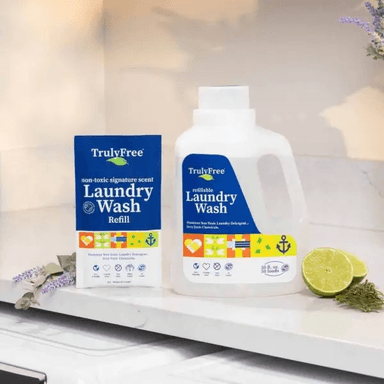
When it comes to washing cloth diapers, Truly Free Home Laundry Wash is a safe, reliable choice you can trust. Our non-toxic, baby-safe formula is free of harsh fragrances, artificial dyes, optical brighteners, and fabric softeners, so it rinses clean and leaves nothing behind on fabric. Plus, its plant-powered ingredients are powerful enough to cut through the heavy soiling of diaper laundry while being gentle on baby's sensitive skin.
One important note for cloth diapering families specifically: opt for our Unscented Laundry Wash and Unscented Softening Rinse. Pair those with Truly Free Enzyme Stain Remover, which breaks down protein and organic stains at the source, and you have a complete cloth diaper care system.
For those stubborn moments when extra help is needed, OxyBoost is a plant-based oxygen booster that tackles lingering stains and odors without chlorine bleach, which can break down diaper elastics and fabric over time.

A solid two-cycle wash routine is the foundation of every clean cloth diaper stash. Here's how to do it.
The pre-wash step is easy (and tempting) to skip, especially when you’re a busy mom who already has a lot on your plate. But it matters.
Pre-washing removes the bulk of soil and loosens residue before the main wash cycle. It primes the fabric for deeper cleaning, helps prevent stains from setting in, and removes any lingering residue that could irritate sensitive skin. For new diapers, the pre-wash eliminates any manufacturing residues and begins building the absorbency of natural fiber inserts (new hemp, cotton, and bamboo diapers need several washes to reach full absorbency).
What You Need:
Instructions: Place soiled diapers in the washing machine. Add Laundry Wash to your washing machine and Enzyme Stain Remover to the drum. Add Softening Rinse to the proper dosing tray or during the rinse cycle, depending on the type of washer you own. Set washer to cold and run the pre-wash cycle.
The main wash cycle is where the real cleaning happens. Hot water is key—it dissolves detergent more effectively, helps deactivate bacteria, and removes waste that cold water can leave behind.
What You Need:
Instructions: Once the pre-wash finishes, shake out the diapers and return them to the washer. Add Laundry Wash to your washing machine and Enzyme Stain Remover to the drum. Add Softening Rinse to the proper dosing tray or during the rinse cycle, depending on the type of washer you own. Set to hot and run the Heavy Duty cycle. When finished, hang all diaper covers to air dry and put the absorbent inserts in the dryer on a warm tumble setting.
Mom-approved move: If any stains remain after washing, rewash with OxyBoost or lay the diapers flat in direct sunlight. Sunlight is a remarkable natural bleaching agent and is especially effective on organic stains.
A note on hard water: If your home has hard water, skip extra rinse cycles. Additional rinses in hard water can cause mineral buildup on diapers rather than removing residue. A small amount of white vinegar in the rinse cycle can help soften fabrics and deodorize without causing buildup.
If opening the diaper pail makes your eyes water, or if clean diapers smell fine until your baby wets them and then the smell intensifies dramatically, you’re dealing with ammonia buildup. Ammonia buildup is one of the most common cloth diaper problems, but it's completely fixable.
Ammonia is a chemical byproduct of urea, which the body naturally produces and releases in urine. When urine is diluted, urea doesn't have much time to convert into ammonia. But when urine sits in a warm, moist environment, urea breaks down quickly, creating that strong, unmistakable smell.
Beyond the offensive odor, ammonia can cause topical rashes that often present as flat and red and, in severe cases, leave open sores. Ammonia burn is a chemical burn and is very painful.
A few practical steps to prevent buildup before it starts:
Wash diapers frequently. Aim to wash your cloth diapers every two days. Letting soiled diapers sit too long—especially in warm or humid conditions—dramatically accelerates the urea-to-ammonia conversion process. Overnight diapers are often the biggest contributors since they stay wet longer and pick up more concentrated urine.
Rinse after every change when possible. Using a diaper sprayer to rinse urine out of inserts before they go into the pail can make a significant difference, especially for older babies with more concentrated urine.
Use the right detergent formula. Gentle, non-toxic, and fragrance-free laundry detergents, like Truly Free Home Unscented Laundry Wash, don’t contain harsh or harmful ingredients, so they don’t leave residue behind that can irritate your baby’s delicate skin.
Use enzyme support. Truly Free Home Enzyme Stain Remover breaks down the proteins in urine that contribute to ammonia formation. Using it consistently in both the pre-wash and main wash helps prevent buildup from accumulating in the first place.
Keep the diaper pail breathable. A dry pail with some airflow keeps diapers cooler between washes, which slows the conversion process. Sealed, airtight pails trap heat and accelerate ammonia development.
Even with a solid routine, cloth diapers sometimes need a full reset. If they're repelling liquid, if they still smell right out of the wash, or if buildup has accumulated from a previous detergent, it's time to give them a good strip.
Laundry stripping is a deep-cleaning process that removes residue, mineral deposits, and embedded ammonia from the fabric. It's not something you should do regularly (it's harder on the fabric than a normal wash), but it's a powerful corrective when your typical routine isn't getting the job done.
Signs you need to strip your cloth diapers:
How to strip cloth diapers:
Start with clean diapers. Run a hot wash with just OxyBoost (no detergent), which uses oxygen to lift residue, followed by at least one, ideally two, rinse cycles. Check that the water runs completely clear, as any sudsing indicates residue is still present.
After stripping, return to the two-cycle routine using a clean-rinsing, fragrance-free, softener-free detergent. The benefits of laundry stripping won’t last unless your underlying washing routine is also corrected.

Even parents who have been cloth diapering for months can fall into habits that undermine their wash routine. Here are the most common ones:
Using a "baby" detergent like Dreft. Dreft is loaded with fragrance, greasy fabric softeners, and optical brighteners—the trifecta of ingredients that are specifically designed not to rinse out and will cause ammonia and bacteria to bind to the fabric. The fact that it's marketed for babies does not make it safe for diapers. Baby-safe labels aren’t regulated by the FDA.
Using too much detergent. More detergent does not mean cleaner diapers. Excess detergent leaves residue in the fabric, which traps odors and bacteria over time. Follow the recommended amount for a heavily soiled load.
Using too little detergent. The opposite problem is equally common. Cloth diapers are heavily soiled laundry, so a light splash of detergent won't cut through the bacteria, fats, and proteins in the fabric to get them fully clean.
Skipping a pre-wash. The pre-wash exists for a reason. Without it, the main wash cycle has to work twice as hard and may not fully remove bulk soiling.
Washing too infrequently. Waiting four to five days between washes gives ammonia time to set into the fabric and bacteria time to multiply. Washing cloth diapers every two days is the general recommendation.
Using dryer sheets or conventional fabric softeners on diaper covers. Even if your regular detergent is clean, running a diaper cover through a dryer with softener sheets deposits a waxy coating that causes repelling. Wool dryer balls or Truly Free Home Dryer Angel are safe, effective alternatives.
Assuming the problem is the diaper. Before blaming a diaper brand for leaks or rash, always investigate how you're washing your diapers first. Most "diaper performance" issues trace back to residue or ammonia buildup.
Is regular laundry detergent safe for cloth diapers?
Most conventional laundry detergents are not ideal for cloth diapers because they contain one or more problematic ingredients—fragrance, fabric softener, optical brighteners, or dyes—that build up on fabric and cause absorbency and odor issues over time. The best detergent for cloth diapers is one that is specifically free of these additives, powerful enough to clean heavy soiling, and clean-rinsing.
Can I use the same detergent for cloth diapers as for the rest of my laundry?
Yes, if it meets the criteria above. Truly Free Laundry Wash works safely across all household laundry and meets every requirement for cloth diaper care, making it one less product to manage.
How do I know if my cloth diaper detergent is causing problems?
Watch for diapers that repel liquid, develop persistent odor even after washing, cause recurring rash, or feel stiff and coated. Any of these can indicate residue buildup from detergent. Stripping cloth diapers and switching to a clean-rinsing formula typically resolves the issue.
How often should I wash cloth diapers?
Every two days is the standard recommendation. However, washing more frequently in hot weather or when your baby is older (and producing more concentrated urine) can prevent ammonia buildup before it starts.
What water temperature should I use?
Cold for the pre-wash, hot for the main wash. Hot water dissolves detergent more effectively and helps deactivate bacteria. Always check your diaper manufacturer's guidance, since some covers have temperature limits to protect the waterproofing liners.
My diapers smell fine out of the wash, but stink when baby wets them. What's going on?
Ammonia is often only noticeable after diapers become wet. They might smell clean fresh out of the wash, but as soon as your baby wets the diaper, the smell emerges. This is a classic sign of ammonia buildup. Strip the diapers, then return to a consistent two-cycle routine with an unscented, clean-rinsing detergent.
Can I use vinegar in my cloth diaper wash?
A small amount of white vinegar in the rinse cycle can help neutralize odors and soften fabrics, and it's particularly useful for homes with hard water. Avoid using vinegar in the main wash cycle, and don't use it every single load. Some diaper manufacturers also advise caution with vinegar on certain waterproof fabrics, so check your specific diaper's care instructions.
Do I need to wash new cloth diapers before using them?
Yes. New diapers—particularly those made from natural fibers like hemp, cotton, or bamboo—contain natural oils from the manufacturing process that reduce absorbency. Wash them four to six times before first use to strip those oils and build full absorbency. Synthetic microfiber inserts typically only need one wash.
Cloth diapering is a commitment worth making. With the right cloth diaper washing routine and a detergent your family can trust, keeping your stash clean and your baby comfortable becomes one less thing to worry about.
