Your Cart (0)

Your cart is currently empty!

Our Favorite Non-Toxic Products to Add to Your Baby Registry

Posted By: Katherine Chang|Posted On: 2/27/2026

Quick Guide: Building a Non-Toxic Baby Registry

  • Avoid these ingredients: added fragrances, phthalates, BPA/BPS, flame retardants, PVC, formaldehyde, and PFAS ("forever chemicals")
  • Look for these certifications: OEKO-TEX®, GOTS (textiles), and GREENGUARD Gold (mattresses/furniture)
  • Choose safer materials: organic cotton, glass, stainless steel, food-grade silicone, and natural latex over plastic and polyurethane foam
  • Key registry categories to prioritize: organic clothing and swaddles, non-toxic laundry detergent, safer diapers, glass or stainless feeding gear, and a GREENGUARD Gold-certified crib mattress
  • A general guide: fewer ingredients = better, especially for skincare, bath products, and laundry


What to Look Out For and Avoid When Building a Non-Toxic Baby Registry

While modern life makes it nearly impossible to avoid every harsh chemical, synthetic fiber, or plastic item, what is in your control is being mindful about what you purchase and expose your child to. When building your baby registry, try to steer clear of products containing the following: 

  • Added fragrances: “Fragrance” on a label can be code for dozens, sometimes hundreds of undisclosed chemicals. Babies’ skin and respiratory systems are incredibly sensitive, so reach for fragrance-free or naturally-scented products instead.


  • Phthalates: Often found in plastics, lotions, and even some baby gear, phthalates are used to make materials more flexible and to stabilize fragrance in personal care products. While some baby products come with a clear “phthalate-free” label, ingredient transparency varies. For example, full chemical disclosures aren’t always required in baby gear. Be your own advocate and reach out to brands directly if you’re not sure.


  • BPA, BPS, and other bisphenols: Most commonly found in plastics and food containers, these harmful chemicals can leach into food and liquids, particularly when exposed to heat, and are linked to reproductive and developmental issues. Instead, choose glass, stainless steel, or alternatives that explicitly state they’re BPA-free whenever possible.


  • Flame retardants: Frequently added to mattresses, nursing pillows, upholstered items, and even some car seats, flame retardants have raised concerns due to potential harmful health effects. Ensure the brands you buy from do not use added flame-retardant chemicals. And don’t hesitate to contact manufacturers if you’re unsure before making a purchase.


  • PVC (polyvinyl chloride): Often found in waterproof mattress covers, bibs, teethers, and changing pads, PVC can contain harmful additives linked to health concerns. Opt for safer waterproof materials like food-grade silicone.


  • Formaldehyde and formaldehyde-releasing preservatives: These are sometimes added to fabrics and personal care products to prevent mold and bacteria growth. Look for items with certifications like OEKO-TEX® (textiles tested for harmful substances) or GOTS (textiles that meet rigorous environmental and safety standards outlined in the Global Organic Textile Standard Programme throughout the production process) to prioritize options without them.


  • PFAS (aka “forever chemicals”): PFAS are water and stain-resistant chemicals found in some baby gear, textiles, and even some formula. Exposure is associated with weakened immune response to vaccines, lower birth rate, and developmental delays. Seek out brands that clearly mark their products as PFAS-free.
Mom and kids snuggling in bed

Your Non-Toxic Baby Registry Guide for a Safe, Healthy Home

Protect your baby from day one. Our non-toxic registry guide covers everything from baby gear and feeding to laundry care, diapering, bedding, and more.

Organic Cotton Clothing, Swaddles, and Sleep Sacks

That oh-so-soft newborn skin is thinner and far more sensitive than ours, making the fabric choices for your little one important. Common materials like polyester and even conventional cotton can be treated with pesticides, synthetic dyes, and harsh chemical finishes during production. Choosing organic cotton helps minimize that exposure. Consider clothing and swaddles with the OEKO-TEX® or GOTS logo.

Some of our go-to brands include: 


Gentle, Natural Laundry Care

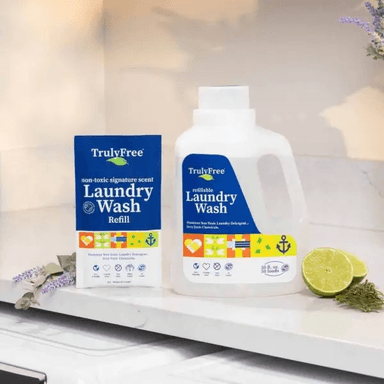
Buying organic clothing and swaddles that are free of dangerous toxins is a good place to start. But if you’re washing them with detergent chock-full of harmful ingredients like harsh fragrances, artificial dyes, optical brighteners, and harsh preservatives, it can undo the care and effort you put in. Babies come with a whole lot of laundry, and most standard detergents include toxic chemicals that cling to fabric and irritate sensitive skin. Go with a gentle, non-toxic laundry detergent like Truly Free Home Laundry Wash.

Our formula is: 

  • Is free of harmful fragrances
  • Skips dyes and brighteners
  • Uses plant- and mineral-based ingredients
  • Is tough on stains, yet designed for sensitive skin and babies


For more, read: Is Regular Laundry Detergent Safe for Baby Clothes?


Non-Toxic Baby Gear 

Baby gear includes big-ticket items you’ll rely on almost daily—from car seats and strollers to travel cribs. The thing is, many of them are made with plastics, synthetic fabrics, polyurethane foam, and chemical flame retardants. Although you won’t be able to avoid them entirely, you can be selective when shopping for gear by prioritizing brands that:

  • Clearly disclose materials used
  • Avoid added flame-retardant chemicals
  • Use OEKO-TEX®-certified or organic fabrics when possible
  • Limit polyurethane foam or use safer foam alternatives
  • Leave out PVC and unnecessary plastic components


Our Favorite Non-Toxic Car Seats


Our Favorite Non-Toxic Strollers 


Our Favorite Non-Toxic Travel Cribs


Safer Diapering

Whether you go the cloth diaper or disposable route, it all comes down to the materials used. If you’re considering cloth diapering, a reliable resource is Green Mountain Diapers (don’t forget to pair them with a non-toxic detergent to prevent residue buildup and irritation). Most disposable diapers contain chlorine bleaching byproducts, added fragrances, and lotions, so look for brands that rely on:

  • Real cotton and unbleached pulp (ideally OEKO-TEX®-certified)
  • Chlorine-free processing
  • No fragrances


Our favorite non-toxic disposable diapers include: 


As for disposable wipes, there’s no “perfect” solution available since they require strong preservatives to remain moist. But these are some safer options to consider. 

Our picks include: 


For more, read: Your Cloth Diaper Washing Guide


Better Feeding Basics

Feeding your baby—whether you’re nursing, bottle-feeding, or introducing solids—involves many pieces that come into direct contact with their food, mouth, and hands every single day. Reaching for feeding gear made from glass, stainless steel, food-grade silicone, or untreated wood rather than plastic (which can leach other compounds, especially when heated or scratched) means less potential exposure to BPA, BPS, phthalates, and other usual suspects.

Our Favorite Non-Toxic Nursing Cover and Pads


Our Favorite Non-Toxic Bottles, Dishes, and Utensils


Our Favorite Non-Toxic Burp Cloths and Bibs


Our Favorite Non-Toxic High Chairs 


Mindful Bath Time Essentials 

By now, you’ve probably noticed a recurring theme: Many mainstream bath products are filled with harsh fragrances, sulfates, artificial dyes, and preservatives that can be drying or irritating, especially for babies. Choosing formulated-safe products helps nurture your baby’s still-developing and vulnerable skin barrier, leaving out unnecessary extras (the fewer the ingredients, the better). Bath time doesn’t need a 10-step regimen made up of a dozen products—just a few pure, simple essentials get the job done without overcomplicating things.

Our Favorite Non-Toxic Bath Wash/Shampoo


Our Favorite Non-Toxic Bath Towels and Washcloths


Our Favorite Non-Toxic Bath Toys (100% silicone or rubber)


Our Favorite Non-Toxic Bath Accessories


Our Favorite Non-Toxic Moisturizers and Diaper Cream


Well-Crafted Bedding 

You know what they say: Babies eat, poop, and sleep on repeat. They’ll spend a significant amount of time snoozing, mainly in those early months. A lot of traditional crib mattresses are packed with polyurethane foam, vinyl (PVC), flame retardants, and adhesives that can off-gas volatile organic compounds (VOCs). When searching for a safer mattress, look for:

  • GREENGUARD Gold certification (addresses indoor air quality concerns comprehensively, based on rigorous testing standards)
  • Organic cotton or wool covers
  • Natural latex (if used) rather than synthetic foam
  • No added flame retardants


Combine it with 100% cotton (ideally organic) sheets, and swap waterproof vinyl mattress protectors in favor of organic cotton or wool-based offerings.

Our Favorite Non-Toxic Crib Mattresses


Our Favorite Non-Toxic Crib Sheets and Mattress Protectors 


Our Favorite Non-Toxic Cribs


While it might not seem like it, you don’t need tons of products to care for a baby. In fact, the most meaningful must-haves are often the simplest: clean ingredients, clean air, and plenty of snuggles. This guide isn’t meant to spark fear—it’s about bringing awareness and empowering you to make thoughtful choices for your baby. By mindfully selecting non-toxic baby products, you’re creating a foundation for a healthier space for your baby and the entire family.
SHOP TRULY FREE HOME