FEATURED
YOUR EVERYDAY ESSENTIALS
ExPLORE
SUPPORT
DYE-FREE CLEANING
FEATURED
YOUR EVERYDAY ESSENTIALS
ExPLORE
SUPPORT
DYE-FREE CLEANING

When you think about which products in your home have the most direct contact with your body, cleaning products are near the top of the list. Your laundry detergent cleans every piece of clothing you wear, your sheets, your towels. Your dish soap touches the plates you eat off of. Your surface cleaner is on the counter where you prep food and the table where your kids sit.
That constant, low-level contact makes cleaning products a practical place to start. You don't need to overhaul every cabinet, but if you're going to start somewhere, these three categories cover the most ground.
This is the single most useful skill in low-tox living, and it takes about 30 seconds once you know what to look for. Flip a bottle over and find the ingredient list. If there isn't one, that's your first red flag—any brand confident in its formula will list what's inside. Once you're looking at the ingredients, here's what to watch for:
On the other hand, ingredients like plant-derived surfactants (decyl glucoside, cocamidopropyl betaine), citric acid, and sodium benzoate are functional, biodegradable, and widely used in products formulated for sensitive skin.
One of the most common mistakes people make when going low-tox is trying to do everything at once. Tossing a cabinet full of half-used products feels decisive, but it's wasteful and expensive. This method also turns a manageable shift into an overwhelming project.
A more practical approach: when a product runs out, replace it with a better one. Your all-purpose cleaner is empty? That's your moment to try something formulated with ingredients you can actually pronounce. Your laundry detergent is running low? That's your sign to swap.
Over a few months, you'll cycle through most of the products in your home without spending extra money or creating unnecessary waste.
Part of low-tox living is realizing you probably don't need as many cleaning products as you think. The cleaning aisle is designed to sell you a different bottle for every surface, but most of those categories are unnecessary.
Dryer sheets coat your clothes in a film that can irritate skin and reduce fabric absorbency over time. Wool dryer balls or a plant-based dryer sheet alternative are better for your clothes and skin and last longer.
Air freshener sprays are almost entirely fragrance and propellant. Your home smells clean when the surfaces are actually clean—and not covered in harsh chemicals. So, you don't need a spray to cover anything up. Of course, if you’re looking for a freshener with naturally derived ingredients, try Truly Free Home Space Freshener that’s scented with a blend of essential oils.
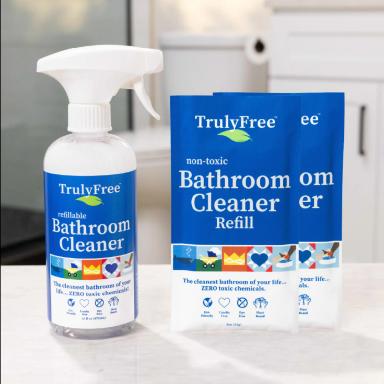
Specialty cleaners for every room are usually just variations of the same formula in different bottles. A solid all-purpose cleaner, a bathroom cleaner, and a glass cleaner cover virtually everything.
When it comes to going low-tox, the goal isn't perfection. What’s important is making informed choices, one product at a time, based on your lifestyle and budget.