
FEATURED
YOUR EVERYDAY ESSENTIALS
ExPLORE
NON-TOXIC CLEANING 101
Your Cart (0)
Your Cart (0)
FEATURED
YOUR EVERYDAY ESSENTIALS
ExPLORE
NON-TOXIC CLEANING 101
The single most effective thing you can do to set your family up for a healthy travel experience is to pack a few key items before you leave the house. You can't control what products a hotel uses to clean its rooms, but you can control what you bring with you.
A basic low-tox travel kit doesn't need to be complicated. We recommend focusing on the items you use most:

While airplanes are cleaned between flights, the turnaround time is short, so the job isn't always thorough. In fact, one study found that tray tables, armrests, and seatbelt buckles tend to carry more bacteria than most people expect. Tray tables, for instance, had 2,155 colony forming units of bacteria per square inch. Plus, the cleaning products used on planes are typically industrial-grade, which means harsh chemical residue is part of the package.
When you board, wipe down your immediate area. Focus on the tray table (both sides), armrests, seatbelt buckle, and the screen, if there is one. Use non-toxic, biodegradable wipes rather than the antibacterial kind loaded with harsh chemicals that leave behind more toxic residue.
For air quality, you actually want to keep the overhead vent open. The filtered air from the vent is cleaner than the cabin air around you and creates a small barrier of airflow in your personal space.
A hotel room might look spotless, but the industrial-grade cleaning products most places use leave behind harmful residue that can irritate skin or cause allergy flare-ups and respiratory issues. Plug-in air fresheners, scented sprays, and conventional bathroom cleaners also fill those small rooms with harsh fragrances and toxic chemicals that linger long after housekeeping leaves.
The "new car smell" in a rental isn't actually a sign of cleanliness; it's off-gassing from plastics, adhesives, and synthetic materials in the car's interior. Rental cars also frequently get treated with heavy-duty cleaning sprays and scented air fresheners between customers—both of which you don’t want your family breathing in.
This is especially worth doing if you're traveling with young kids who are buckled into the back seat and breathing in concentrated air for hours at a time.

Travel eating is where a lot of low-tox intentions fall apart. That's okay. You're not going to eat perfectly on a road trip, and that's not the goal. But a few easy choices can reduce your exposure to BPA and other unnecessary chemicals in food packaging.
Beyond the travel-specific scenarios, the products you put on your body matter just as much as what you use to clean surfaces. The problem is, hotel-provided mini bottles of sunscreen, shampoo, lotion, and deodorant are almost always full of harsh fragrances, parabens, and other ingredients that aren’t safe for your skin or overall well-being.
Packing travel sizes of your own non-toxic personal care products is one of the easiest ways to reduce your toxic load from these products. Plus, when you bring your own products, you know what's in them and whether your skin tolerates them. (No mystery rashes.)
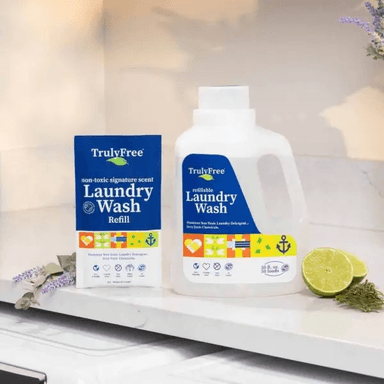
The same goes for laundry. If you’re staying at an Airbnb or somewhere that offers laundry services, be sure to pack a clean, fragrance-free laundry detergent. Bringing your own detergent ensures you’re not coating your clothes, linens, and towels with toxic chemicals found in most conventional brands.
Limiting your family’s toxin exposure while traveling doesn’t mean you need to travel in a bubble. All it takes for a healthier trip is a few intentional choices in the moments that matter, so you can relax and enjoy the time together.
