FEATURED
YOUR EVERYDAY ESSENTIALS
ExPLORE
SUPPORT
DYE-FREE CLEANING
FEATURED
YOUR EVERYDAY ESSENTIALS
ExPLORE
SUPPORT
DYE-FREE CLEANING
Most conventional cleaners get their signature scents from potentially harmful fragrance blends. The problem? The word "fragrance" on a label can represent dozens of undisclosed, harsh chemical compounds. The FDA doesn't require companies to list individual fragrance ingredients, which means you often don't know what you're breathing in while you clean.
For families with young children, this matters even more. Children breathe faster than adults and are closer to the surfaces you clean, so their exposure is often higher. According to the American Academy of Pediatrics, reducing unnecessary toxic chemical exposure during early development is a smart, proactive step for parents. Common reactions to harmful fragrance include skin irritation, respiratory sensitivity, and headaches.
Switching to fragrance-free household cleaners doesn't mean sacrificing cleaning power. It simply means removing ingredients that aren't doing any actual cleaning in the first place.

From the laundry room to the nursery, every space in your home has different cleaning demands. Here's a closer look at where fragrance-free swaps make the biggest difference and what to look for in each room.
Laundry is usually the biggest fragrance offender in a home. Traditional detergents and fabric softeners are loaded with harmful scents designed to linger on fabric for days. For babies and kids with sensitive skin, those lingering scents can mean itchy pajamas and irritated skin.
A fragrance-free laundry detergent that relies on bio-based enzymes to break down stains and odors gives you genuinely clean clothes without the perfume residue. Look for formulas that skip the optical brighteners and dyes, too.
Every room in your home has different cleaning needs, but the same principle applies everywhere: the cleaner should actually clean, not mask odors and gunk with fragrance. Here's what to keep in mind for the spaces your family uses most:
This is a distinction that trips up a lot of shoppers. "Unscented" and "fragrance-free" sound like they mean the same thing, but that’s not always the case.
"Fragrance-free" means no fragrance ingredients are added to the formula. "Unscented," on the other hand, can sometimes mean that fragrance chemicals were added specifically to mask or neutralize other odors, so the product smells like nothing. The result is the same neutral smell, but the ingredient list tells a different story.
When shopping for your family, "fragrance-free" is generally the safer bet if your goal is to reduce overall harmful chemical exposure. Always flip the bottle and check the ingredient list rather than relying on front-of-label claims.
One of the biggest myths about fragrance-free cleaning is that your home won't smell "clean" anymore. But that pine or lavender scent in conventional cleaners isn't clean. It's just a scent layered on top.
A truly clean home actually smells like... not much. And that's a good thing. If you want to add pleasant scents naturally, there are a few easy options that won't compromise your indoor air quality or your family’s health:

Reading cleaning product labels can feel overwhelming, but it gets easier once you know what to look for. Here are a few quick tips for finding fragrance-free cleaning products that actually deliver:
Truly Free Home's full line of cleaning products is formulated without harmful fragrance, dyes, or harsh chemicals. From laundry detergent to surface cleaners, every product is designed to clean effectively while keeping your family's health front and center.
So if you're ready to go fragrance-free, here are a few products to start with:
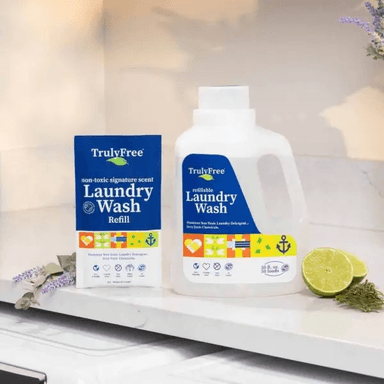
Laundry Wash: A bio-based enzyme formula that removes stains and odors without fragrance, dyes, or fillers.
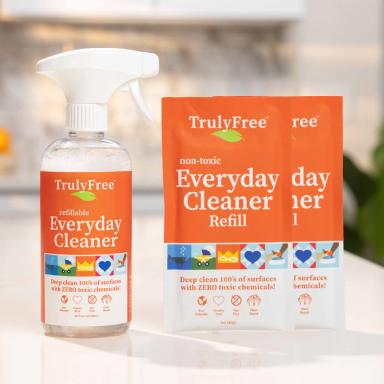
Everyday Cleaner: A versatile surface spray safe for countertops, high chairs, toys, and more.
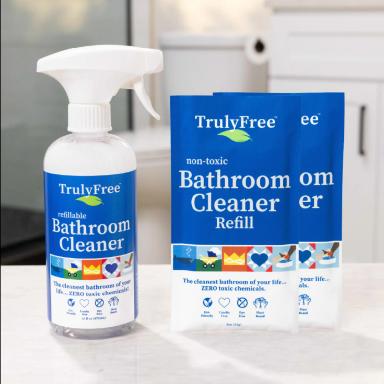
Bathroom Cleaner: Tough on soap and scum buildup and completely fragrance-free.
Glass Cleaner: Streak-free formula for mirrors, windows, and glass surfaces without any added scent.
Going fragrance-free doesn't have to be complicated. It starts with understanding what's actually in your cleaning products and making intentional swaps where it matters most.
And if you've been thinking about switching to a non-toxic laundry routine, there's never been a better time.
Because right now, you can get our Mixed Laundry Bundle for just $39 (77% off).