FEATURED
YOUR EVERYDAY ESSENTIALS
ExPLORE
SUPPORT
DYE-FREE CLEANING
FEATURED
YOUR EVERYDAY ESSENTIALS
ExPLORE
SUPPORT
DYE-FREE CLEANING
Pilling happens when broken clothing fibers on the surface become tangled together, forming the characteristic lint balls that stick to your clothing. The main culprit? Friction.
Every time you wear clothes, they rub against themselves, other fabrics, or surfaces like backpack straps, car seats, and couch cushions. Washing and drying add even more friction. Over time, these threads clump together and can attract loose micro-threads during a wash cycle, speeding up the pilling process.
Some fabrics pill more than others. Knitted materials like fleece are more likely to pill than woven fabrics because the fibers are bound together less tightly, while linen and silk are among the most pill-resistant fabrics. Wool, flannel, and cotton blends are also especially prone to pilling.
For a complete guide on how to wash delicate fibers, read our article: How to Wash Wool, Linen, & Cashmere
You may not be able to eliminate pilling completely, but you can reduce how quickly it happens. Here are tips for preventing pilling on clothes.
Turn clothes inside out before washing. This protects the outer surface from rubbing against other fabrics in the washer, reducing the occurrence of pilling.
Use a gentle cycle. The less agitation your clothes experience, the better. Opt for the gentle cycle unless your garment is visibly soiled.
Wash similar fabrics together. Washing heavy items like jeans with a light sweater can result in increased pilling. Separate your laundry by fabric type to reduce abrasion.
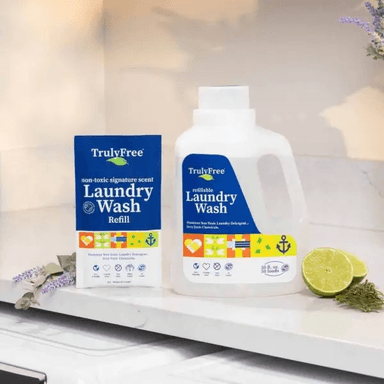
Use a gentle detergent. Harsh chemicals and bleach can weaken fibers, making them more prone to breaking and pilling. Truly Free Home Laundry Wash is formulated to clean effectively without harsh chemicals that damage delicate fibers.
Skip high heat in the dryer. High heat makes fibers brittle and more likely to break. Use low heat or air-dry when possible. Remove clothes from the dryer as soon as they're dry—over-drying contributes to pilling.
Wash less often. Not every garment needs to be washed after one wear. Sweaters, jackets, and other outer layers can be aired out between washes, which reduces friction and extends the life of the fabric.
If your favorite cashmere sweater has already started to pill, don't panic. It's fixable. Here are tried-and-true ways to get rid of pilling.
Fabric shaver. A battery-operated fabric shaver is the fastest and most effective way to remove pills. Lay your garment flat, turn on the shaver, and gently move it in small circles over the pilled areas. Don't press too hard—you want to trim the pills, not cut into the fabric.
Sweater stone. To use a sweater stone, work with the grain of your sweater, gently pushing down with the stone and pulling in one direction. Sweater stones are made of pumice and gently scrape away pills without damaging the fabric.
Lint roller or tape. For lighter pilling on cotton or flannel, a lint roller or sticky tape can pull loose pills off the surface. Press the sticky side onto the fabric and peel away.
Disposable razor. If you don't have a fabric shaver, you can (carefully) use a disposable razor. Pull the fabric taut and gently shave away the pills. Be careful—razors can cut the fabric if you press too hard.
Pilling is a normal part of wear and tear, not a sign that your clothes are ruined. With gentle washing habits, the right detergent, and a fabric shaver on hand, you can keep your clothes looking newer, for longer.