FEATURED
YOUR EVERYDAY ESSENTIALS
ExPLORE
SUPPORT
DYE-FREE CLEANING
FEATURED
YOUR EVERYDAY ESSENTIALS
ExPLORE
SUPPORT
DYE-FREE CLEANING
Mildew is actually a type of mold. It typically grows in a flat pattern on surfaces like shower walls, grout, and window sills, and is easier to remove than other types of mold. Black mold (Stachybotrys chartarum) is more serious and usually appears dark greenish-black. The issue with black mold is it can produce mycotoxins that may cause health issues, especially for people with asthma, allergies, or compromised immune systems.
Exposure to mold can cause a stuffy nose, sore throat, coughing, wheezing, burning eyes, or skin rash. People with asthma or mold allergies may have severe reactions. That's why it's important to remove mold promptly and address the moisture problem that's causing it.
Bathrooms are ground zero for mold and mildew because they combine the two things these fungi need most: moisture and warmth. So every time you shower, bathe, and use the sink, you’re introducing humidity into the air. When that moisture doesn't have a way to escape—through proper ventilation or airflow—it settles on surfaces and seeps into porous materials.
Add in the fact that bathrooms often stay warm and have plenty of organic material (soap scum, skin cells, dust) for mold to feed on, and you've got the perfect breeding ground. That's why even clean bathrooms can develop mold problems if the moisture issue isn't addressed.
If you can see or smell mold, you have mold—even if it's just a few spots.
For surface mold on hard bathroom surfaces, you can clean it yourself. Scrub mold off hard surfaces with a plant-powered bathroom cleaner (avoid bleach, as it only increases your toxin exposure) and water, and dry the area completely. If mold has gotten into porous materials like drywall or insulation, you may need professional help.
Step 1: Protect yourself. Wear gloves, goggles, and consider an N-95 respirator to avoid breathing in mold spores. Open windows and run the exhaust fan for ventilation.
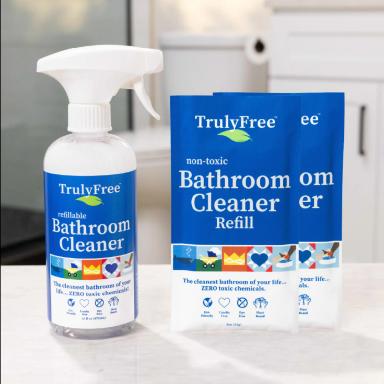
Step 2: Apply cleaner. Spray Truly Free Home Bathroom Cleaner directly onto moldy areas. Our plant-powered formula relies on clean ingredients like citric acid and a sugar-derived surfactant to cut through grime and kill mold without harsh chemicals or toxic fumes.
Step 3: Let it sit. Allow the cleaner to sit for 5-10 minutes so it can break down the mold.
Step 4: Scrub thoroughly. Use a stiff brush to scrub grout lines, corners, and any textured surfaces where mold is hiding. For stubborn mold in grout, you may need to scrub several times.
Step 5: Rinse and dry. Rinse the area with water and wipe it dry completely. Mold can't grow without moisture, so drying surfaces thoroughly is critical.
Step 6: Check for hidden mold. Look under sink cabinets, behind the toilet, and around pipes for any signs of moisture or mold. If you find a water leak, fix it immediately.

Preventing mold is far easier than removing it. So once you've removed existing mold, integrating these simple habits into your routine will keep your bathroom dry, fresh, and mold-free.
Removing mold is only half the job. You need to clean up the mold and fix the moisture problem. Without controlling moisture, mold will just come back.
Run the exhaust fan. Turn it on during showers and leave it running for 15-20 minutes after you're done. Running the fan pulls moisture out of the air and prevents condensation from building up on surfaces.
Squeegee shower walls. After every shower, use a squeegee to remove water from glass doors and tile walls. This simple habit drastically reduces mold growth.
Wash shower curtains regularly. Fabric shower curtains can go in the washing machine. Plastic liners should be washed with warm water and a few spritzes of Truly Free Home bathroom cleaner, then hung to dry completely.
Fix leaks immediately. Even a slow drip under the sink can create enough moisture for mold to grow.
Keep humidity low. Keep humidity levels in your home as low as possible—no higher than 50%. A dehumidifier can help in humid climates or poorly ventilated bathrooms.
Clean regularly. Weekly cleaning with Truly Free Home Bathroom Cleaner prevents mold from getting a foothold in the first place.
For tips on maintaining a clean bathroom, check out our post: How Often Should You Clean Your Bathroom?
If mold has spread to drywall, insulation, or other porous materials, or if you're dealing with mold caused by sewage or contaminated water, call a professional mold remediation service. The EPA recommends hiring professionals who follow guidelines from the government and professional groups.
Bathroom mold is common, but it doesn't have to be permanent. All it takes is removing surface mold with a good cleaner, fixing moisture problems, improving ventilation, and cleaning regularly. And thanks to cleaning products like Truly Free Home Bathroom Cleaner, you can tackle mold without exposing your family to harsh chemicals or toxic fumes.