ExPLORE
SUPPORT
DYE-FREE CLEANING
ExPLORE
SUPPORT
DYE-FREE CLEANING
Before you get started, gather your supplies. Everything on this list is plant-powered, so you won’t have to deal with harsh fumes, harmful ingredients, or additives you'd feel uneasy about using in a space where your kids take their baths. And having it all within arm's reach makes the whole process faster and easier.

Before you start scrubbing, take a moment to prep the space. Remove any personal items, bath mats, and shower curtains. It's a small step that makes a big difference—you'll have better access to every surface and a more thorough clean as a result. Now, let’s get to cleaning.
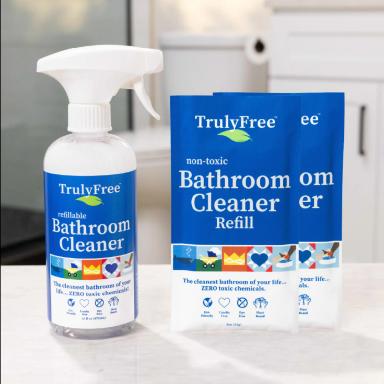
Generously spray your plant-derived bathroom cleaner over all wet surfaces—the tub basin, walls, faucets, and any areas with visible soap scum or grime buildup. Don't be shy. Good coverage means the cleaner can start working on every inch.
Walk away for 5 to 10 minutes. This is where the real work happens. Letting the cleaner dwell on the surface gives it time to break down soap scum and grime while you're doing something else, making scrubbing much easier later.
Sprinkle two to three scoops of oxygen bleach directly over the treated surfaces. Oxygen bleach is a mineral-based cleaning booster that works by releasing hydrogen peroxide and active oxygen molecules when dissolved with water. Combined with your bathroom cleaner, it creates a seriously effective cleaning duo that lifts stains, brightens surfaces, and tackles buildup without the toxic fumes and health risks of traditional bleach.
Using a sponge or cloth, scrub the surfaces using firm pressure and circular motions. Work your way around the tub basin, walls, and fixtures. Take your time—this is where the grime actually lifts.
Pro Mom Move: If your tub or shower is tiled, this is the perfect moment to work on grout lines, too. Use your scrub brush to dislodge any stubborn grout stains, and sprinkle a bit more oxygen bleach directly onto the grout if needed. Or, try Truly Free Home Tub & Tile Cleaner.
Once you've scrubbed every surface, give the entire shower and tub a thorough rinse to remove all remaining cleaner and residue.
Step back and take it in. Your tub and shower should look visibly brighter, cleaner, and completely refreshed—and you did it without breathing in a single harsh chemical.
Even with the best cleaning routine, bathrooms are high-traffic spaces that accumulate soap scum, hard water deposits, and grime from daily use. The good news? If you follow this method consistently—even just every other month—you'll find that each subsequent clean gets easier, buildup has less time to set in, and your surfaces stay brighter for longer.
After your main clean, finish glass panels with an ammonia-free glass cleaner. This simple task will give your glass a streak-free shine and protect the surface without the harsh fumes that come with conventional glass cleaners.
With your shower freshly cleaned, it's the perfect time to launder your cloth curtain as well. If you use a plastic liner, consider replacing it—a fresh liner makes an already clean bathroom feel completely renewed.
Deep cleaning your tub and shower doesn't have to mean filling your bathroom with fumes and hoping your family stays out long enough for it to air out. With plant-derived cleaners and oxygen bleach, you get a thorough, effective clean that's also better for the people you care most about.
Follow this routine every month or two, and you'll never dread bathroom cleaning day again.

Still have questions? Here are answers to some of the commonly asked questions about bathtub and shower cleaning.
Yes—using a plant-derived bathroom cleaner together with oxygen bleach (sodium percarbonate) is safe and effective. The combination works because oxygen bleach activates with water to release cleaning power, which boosts the surfactant action of the bathroom cleaner. This is very different from mixing chlorine bleach with other cleaners, which produces toxic chlorine gas and should never be done.
For most households, a deep clean every four to six weeks is ideal. If your bathroom sees a lot of daily use, monthly cleanings keep buildup manageable. The more consistent you are, the faster each clean becomes.
Yes. This method is safe for porcelain, ceramic tile, fiberglass, and acrylic surfaces. For very delicate or older acrylic, use light pressure with your sponge rather than an abrasive scrub brush.
Plant-derived surfactants (the cleaning agents in thoughtfully formulated cleaners) work by lifting and suspending grease, soap scum, and grime so it rinses away easily. When combined with the oxidizing action of oxygen bleach, you get a cleaning combination that tackles tough stains and discoloration without chlorine, ammonia, or harsh fragrances.
And right now, our Truly Free Home Bathroom Cleaner is Buy 6, Get 4 Free. That's 10 Bathroom Cleaners for $39.