FEATURED
YOUR EVERYDAY ESSENTIALS
ExPLORE
SUPPORT
DYE-FREE CLEANING
FEATURED
YOUR EVERYDAY ESSENTIALS
ExPLORE
SUPPORT
DYE-FREE CLEANING
Volatile organic compounds are chemicals with a high vapor pressure and low water solubility.
In simpler terms? VOCs are chemicals that easily evaporate into the air at room temperature.
Many VOCs are human-made chemicals used and produced in the manufacturing of paints, pharmaceuticals, and refrigerants.
These particular compounds are "volatile" because they transition from a liquid or solid form into a gas quickly—which means they don't just sit on surfaces.
They escape into your air.
Some of the more familiar VOCs include:
The problem isn't just one product or one chemical.
It's the cumulative effect of dozens of VOC-emitting products used every day in enclosed spaces.
Total volatile organic compounds, or TVOC, is a measurement that tells you the overall amount of VOCs in a given space.
This metric was created because it's impossible for air quality monitors to measure every single VOC in a given space, due to the sheer abundance of compounds.
Think of it this way: if individual VOCs are like flowers, TVOC is the whole bouquet.
Instead of measuring thousands of individual compounds, TVOC gives you a snapshot of overall VOC pollution in your home.
Here's what TVOC readings mean for your indoor air quality:
If you're using an air quality monitor and seeing TVOC levels above 0.5 mg/m³, your home has elevated VOC pollution that needs to be addressed.
Since organic chemicals are widely used as ingredients in household products, VOCs are emitted by thousands of everyday products.
Paints, varnishes, and wax all contain organic solvents, as do many cleaning, disinfecting, cosmetic, degreasing, and hobby products.
Here's what's likely releasing VOCs into your indoor air right now:
Conventional cleaners, disinfectants, and air fresheners are major sources of VOCs.
Many contain solvents like 2-butoxyethanol (found in glass cleaners) and harsh fragrances that off-gas continuously—even after you've finished cleaning. Every time you spray a conventional cleaner, you're releasing volatile chemicals into your air.
Those chemicals don't disappear. They linger.
The Truly Free Home Solution:
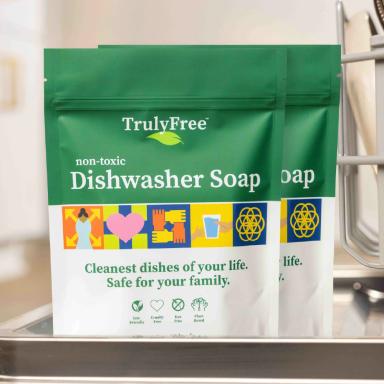
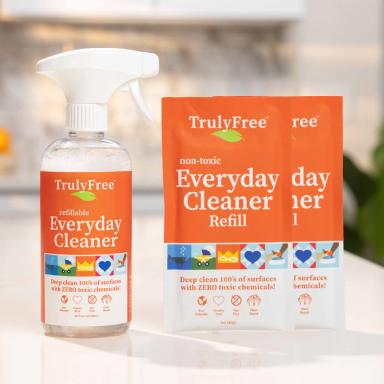
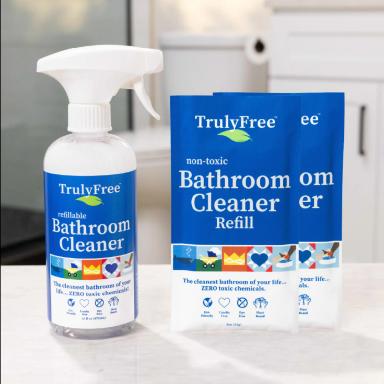
Truly Free Home cleaning products are formulated without harmful fragrances or harsh chemicals that affect your home's indoor air quality.
From Everyday Cleaner to Bathroom Cleaner, every product is plant-powered and consciously crafted, so you can feel good about using them inside your home and around your family.
Fresh paint, varnishes, wood stains, and lacquers release VOCs as they dry—and can continue off-gassing for months afterward.
That "new paint smell" everyone talks about? That's VOCs evaporating into your home's air.
Pressed wood products, laminate flooring, carpets, adhesives, and caulking all emit volatile organic compounds.
New homes and recently renovated spaces often have the highest VOC levels because so many materials are off-gassing at once.
Nail polish, hairspray, perfumes, and aerosol products contain VOCs that disperse into the air when used.
Even the scented lotion you rub on your hands releases chemicals into your breathing space.
New furniture—especially items made with pressed wood, foam cushions, or synthetic fabrics—can release volatile organic compounds for extended periods.
Mattresses, upholstered chairs, curtains with stain-resistant treatments—they all contribute to your home's VOC load.
Paints, solvents, and other chemicals stored in your garage or basement can leak VOCs even when sealed.
If your garage is attached to your home, those fumes can seep inside through shared walls and doorways.
EPA studies found levels of about a dozen common organic pollutants to be two to five times higher inside homes than outside, regardless of whether the homes were located in rural or highly industrial areas.
Your home isn't a safe haven from pollution.
For many families, it's the most polluted environment they're exposed to every day.

Breathing in harmful VOCs can irritate the eyes, nose, and throat, can cause difficulty breathing and nausea, and can damage the central nervous system and other organs.
Some VOCs can cause cancer in animals; some are suspected or known to cause cancer in humans.
The severity of health effects depends on three factors:
Short-term exposure to VOC vapors can cause:
If you or your children experience these symptoms regularly at home—especially if they improve when you leave the house—VOCs could be the culprit.
Prolonged exposure to VOC vapors can cause damage to the liver, kidneys, or central nervous system. Some VOCs, like benzene and formaldehyde, are classified as known or suspected carcinogens.
The American Lung Association warns that long-term exposure can lead to chronic respiratory diseases and may increase cancer risk—especially for children whose developing bodies are more vulnerable to chemical exposures.
This isn't about one exposure creating an immediate crisis. It's about the daily accumulation of invisible toxins that stress your family's bodies over time.
If you're experiencing any of the below symptoms at home—especially if they improve when you leave the house—VOCs could be the culprit:
Pay attention to patterns. Do your kids complain of headaches after you clean the bathrooms? Does anyone in your family have unexplained respiratory issues that seem worse at home? Do you feel more tired or foggy-headed on days when you're home more? These could all be signs that VOC levels in your home are too high.
Low-VOC products contain reduced levels of volatile organic compounds compared to conventional versions. Many products now advertise themselves as "low-VOC," including paints, flooring, and building supplies.
But here's the problem: "low-VOC" isn't a regulated term. That means standards vary wildly between manufacturers. Some products labeled low-VOC still contain harmful chemicals—they just have fewer VOCs than the standard formula.
It's like saying a cigarette has "less tar." It's still harmful.
Opt for products that are:
Increasing the amount of fresh air in your home helps reduce the concentration of VOCs indoors.
Here are the most effective steps you can take to lower the amount of VOCs in your home:
This is the single most effective change you can make. Conventional cleaning products are used multiple times per week in enclosed spaces—bathrooms, kitchens, laundry rooms. Every time you spray a conventional cleaner or do a load of laundry with toxin-laden detergent, you're releasing VOCs.
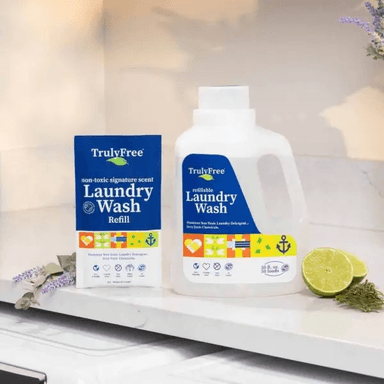
Truly Free Home cleaning products are formulated without toxic fragrances or harsh chemicals that are harmful to your air quality. From Laundry Wash and Everyday Cleaner to Bathroom Cleaner, every product is plant-powered, gentle, and made with carefully selected ingredients.
Already using Truly Free Home products? You've taken the biggest step toward improving your indoor air quality. Here's what else you can do:
If you're painting, using adhesives, or doing any project that involves chemicals, open windows and use fans to increase airflow. Even low-VOC paints benefit from ventilation during application and for 48-72 hours afterward.
Keep paints, solvents, and other chemical products in a detached garage or shed—not in your home or attached garage, where fumes can seep inside. If you must store them inside, keep them in sealed containers in a well-ventilated area away from living spaces.
When renovating or redecorating, opt for paints and materials specifically labeled as zero-VOC. Look for third-party certifications like Green Seal or GREENGUARD Gold to ensure the products meet strict standards.
If possible, let new furniture sit in a garage or outdoor area for a few days before bringing it inside. This allows the bulk of VOCs to dissipate outdoors so they don't end up concentrated in your home.
While HEPA filters primarily target particles, air purifiers that include activated carbon filters can help reduce VOC levels by adsorbing gaseous pollutants. Place them in high-traffic areas and bedrooms for maximum benefit.
Don't stockpile cleaning products, paints, or chemicals. The less you store, the fewer VOCs accumulate in your home. Buy what you'll use in the near term, and store the rest outside your living space.
VOCs are one of the most common—and most overlooked—indoor air pollutants. They come from everyday products, accumulate in enclosed spaces, and can cause both immediate and long-term health effects.
The good news? You have control over many of the sources.
By switching to thoughtfully formulated cleaning products like Truly Free Home, improving ventilation, and being mindful about what you bring into your home, you can significantly reduce your VOC exposure.
You can create healthier indoor air for your family. One simple swap at a time.