FEATURED
YOUR EVERYDAY ESSENTIALS
ExPLORE
SUPPORT
DYE-FREE CLEANING
FEATURED
YOUR EVERYDAY ESSENTIALS
ExPLORE
SUPPORT
DYE-FREE CLEANING
Most conventional floor cleaners are formulated to disinfect and leave a strong "clean" scent. That typically means a cocktail of ammonia, bleach, harsh fragrances, and other harmful chemicals that linger on surfaces after mopping.
For adults walking around in shoes, the exposure is minimal, but for a baby crawling across the floor with bare hands and knees, or a dog whose paws and nose are in constant contact with the surface, the exposure is significantly higher.
Babies are especially vulnerable to harmful floor cleaner ingredients because their developing organs absorb chemicals at a higher rate than adults. Cats also lack certain liver enzymes that help break down toxins, while dogs are at risk because they groom their paws and lick surfaces regularly.
The issue isn't just direct contact, either. Many of these harmful chemicals are volatile, meaning they release fumes into the air even after the floor looks dry. Chlorine is heavier than air and settles into low-lying areas, right where pets and babies spend their time.
Harsh fragrances, meanwhile, can contain dozens of undisclosed chemicals, including phthalates, that don't appear individually on the label. Not only that, toxic residue from bleach can remain on surfaces long after mopping and be absorbed through skin or ingested by a teething baby who puts their hands in their mouth after touching the floor.

A truly pet- and baby-safe floor cleaner should clean effectively without leaving toxic residue behind. That starts with the surfactants. Plant-derived surfactants like coco-betaine, decyl glucoside, and alkyl polyglucoside break down dirt and grime just as well as harsh alternatives, and are significantly gentler and biodegradable.
Citrus-based solvents like d-limonene (extracted from citrus peels) are effective natural degreasers that cut through sticky spills and buildup without the fumes associated with ammonia or glycol ethers.
Beyond what's in the formula, look for what's not in it. A safe floor cleaner should be free of chlorine, ammonia, formaldehyde, triclosan, phthalates, harsh fragrances, and dyes. Full ingredient transparency on the label is a good sign. If a product lists "fragrance" without specifying what that means, that’s a red flag.
Also consider whether the floor cleaner leaves behind residue. Some conventional floor cleaners leave a film that makes floors look shiny but creates an ongoing source of harsh chemical exposure. A residue-free formula is better for everyone, especially your loved ones who spend lots of time on the floor.
Knowing which floor cleaner to use is only half the equation. Here's how to get the most out of your floor cleaner—safely.
Let floors dry completely before letting babies or pets back on them, even when using a non-toxic floor cleaner. This reduces any residual moisture and gives surfactants time to fully evaporate.
Skip the "disinfectant" for daily mopping. Most everyday floor messes (dust, crumbs, muddy footprints) don't require disinfecting. A solid sweep and a plant-based cleaner handle daily dirt without the toxic chemical load of a disinfectant.
Ventilate while you clean. Open a window or turn on a fan, regardless of what cleaner you're using. Fresh airflow reduces any airborne exposure during and after mopping.
Read past the marketing. Labels like "natural" and "green" aren't regulated terms. Always check the actual ingredient list rather than relying on front-of-bottle claims.
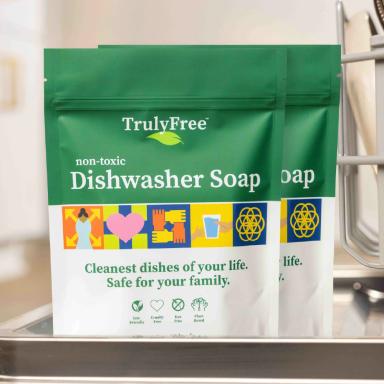
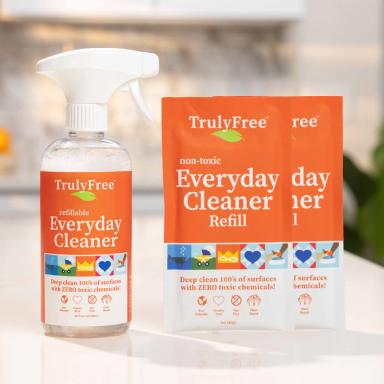
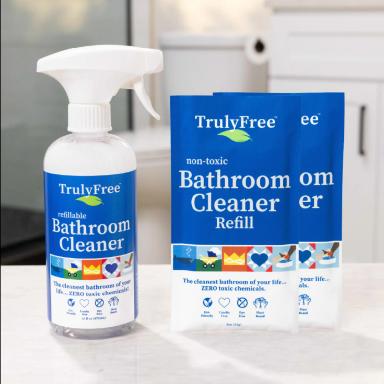
If you're looking for a floor cleaner built specifically for homes with pets and babies, look no further than Truly Free Home Floor Cleaner. Our formula uses safe, plant-derived surfactants like coco-betaine and alkyl polyglucoside, plus d-limonene from citrus peels, so you can enjoy sparkling floors without worrying about fumes or harmful residue.