FEATURED
YOUR EVERYDAY ESSENTIALS
ExPLORE
SUPPORT
DYE-FREE CLEANING
FEATURED
YOUR EVERYDAY ESSENTIALS
ExPLORE
SUPPORT
DYE-FREE CLEANING
How often you need to clean your oven depends on how much you cook. If you use your oven often—think weeknight dinners, weekend baking, the occasional casserole that bubbles over—aim for a deep clean every three months. If you cook less frequently, a deep clean twice a year is usually enough to keep things in good shape.
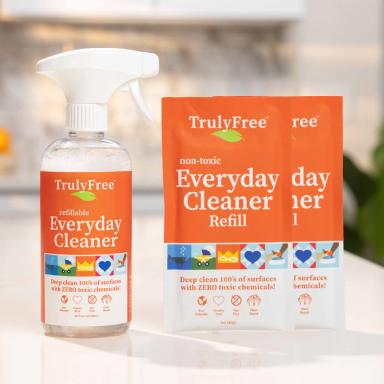
That said, the single best thing you can do is get in the habit of quick wipe-downs after messy meals. A two-minute cleanup while the oven is still warm is infinitely easier than tackling six months of baked-on grease. Keep a bottle of Truly Free Home Everyday Cleaner or Heavy Duty Degreaser nearby and make it part of your post-cooking routine.

Oven cleaning doesn’t have to be a downer—or take hours out of your weekend. With these mom-approved oven cleaning hacks, your oven will be sparkling in no time.
This may seem like a given, but it’s a step many people ignore. Not all ovens have a self-cleaning mode, but if yours does, running it will turn leftover food residue into ash that you can more easily wipe up. Before using the self-cleaning function, make sure to remove the oven racks, large pieces of debris, and turn on the kitchen exhaust fan or open a window. You’ll also want to make sure to wipe up any excess grease to minimize smoke during the high-heat process.
After running your oven’s self-cleaning mode, get rid of the resulting ash debris with the hose function of your vacuum. This hack cuts your cleaning time in half and keeps residue from ending up on the floor outside the oven. Even if you don’t have a self-cleaning function, the vacuum is a great way to suck up any crumbs and loose food pieces so you can focus on the cooked-on residue.
If you’ve ever overfilled a casserole dish or pie, you know that when the filling spills out into the oven, it’s not pretty. There’s the hard-to-get-rid-of burning smell, thick smoke, and once it’s cooled, dark brown, tar-like remnants that are melded to the bottom of the oven. The next time this happens, douse the spillage in salt. It’s okay if your dish is still cooking. The salt will immediately keep the spill from smoking and absorb any liquid, turning it into a dry crust that you can easily clean up once everything’s cooled.
Waiting to clean until your oven has cooled means grease, dirt, and spills have a chance to re-harden, so you’ll spend more time and effort trying to remove it all. But when you tackle cleaning while your oven is warm, all that baked-on mess loosens and is easier to remove. Just make sure the temperature is warm—not hot—to avoid accidentally burning yourself while cleaning.
Make your life easier by using steam to loosen as much tough grime as possible before you get to scrubbing. Simply quarter one to 2 lemons and put them in an oven-safe dish. Cover the lemons with water and bake in the oven at 250º for about 30 minutes. Let the oven cool for a bit before going in with a natural sponge. You’ll find that the lemon and steam make deep cleaning the oven a breeze.
Instead of spraying and wiping every rung on your oven rack individually, remove them from the oven and place them in a warm water bath to dissolve away grease and grime. Fill your sink with lukewarm water, add a generous squeeze of plant-powered dish soap, and swish with your hands to generate suds. Add oven racks and allow to soak for at least 20 minutes, then wipe any leftover residue with a clean sponge and more dish soap.
Using a heavy duty degreaser to clean your oven will cut back on the amount of scrubbing you have to do, but most conventional options contain toxic ingredients like butane, diethylene glycol monobutyl ether (used in paint and wood glosses), and monoethanolamine (MEA), a corrosive surfactant. So while you’re cleaning, you’re not only breathing these substances in; if you don’t wear gloves, they’re seeping into your skin. That’s why a thoughtfully formulated degreaser is so important. Look for formulas made with plant-powered ingredients like alkyl polyglucoside (a sugar-derived cleaning agent), cocomine oxide (a natural surfactant from plant fatty acids), and coco-betaine (a natural surfactant from coconut).

Now that you know the hacks that make cleaning easier, here's how to put them all together for a full deep clean.
Start by removing the burner grates (if you have a gas range) and setting them in the sink to soak in warm, soapy water, using the same method as the oven racks above. While they soak, spray your stovetop surface with a plant-powered degreaser and let it sit for about 5 minutes. The plant-based formula goes to work loosening grease and cooked-on splatter so you don't have to. Once it's had time to sit, wipe everything down with a damp cloth. For stubborn, stuck-on spots, a little extra spray and a non-scratch scrubbing pad will do the trick. Go back to your soaking grates, scrub off any remaining residue, give them a good rinse, and let them dry before putting them back in place on the stovetop.
Oven door glass gets grimy fast. The easiest way to tackle baked-on splatter and grease streaks is to spray an ammonia-free glass cleaner directly onto the glass and wipe with a clean, lint-free cloth using circular motions. For baked-on residue that won't budge with glass cleaner alone, hit it with a spritz of Truly Free Home Heavy Duty Degreaser first, let it sit for a few minutes, then follow up with the Glass Cleaner for a streak-free finish. Don’t forget to clean both the inside and outside of the door—and don't skip the interior panel, which tends to collect the most grease over time.
Knobs, handles, and buttons are the spots most people forget—and they're usually the grimiest. Don’t worry. A quick spray of a truly clean all-purpose cleaner on a damp cloth is all you need to cut through the grease and residue. For knobs that twist off, remove them first and wipe them down individually before cleaning the panel underneath. Just be careful to avoid spraying directly onto electronic displays or buttons. Always spray your cloth first, then wipe. It takes two minutes and makes the whole oven look like new.
Your oven works hard for your family, and you deserve a cleaning routine that actually works for you. With the right hacks in your back pocket and a plant-based degreaser you can trust, keeping your oven clean stops feeling like a chore and starts feeling like just another part of taking care of your home.
So grab your Truly Free Home Everyday Cleaner and Heavy Duty Degreaser, pick one hack to try this weekend, and see the difference for yourself. A cleaner oven without toxins is a win worth celebrating.