
FEATURED
YOUR EVERYDAY ESSENTIALS
ExPLORE
SUPPORT
DYE-FREE CLEANING
FEATURED
YOUR EVERYDAY ESSENTIALS
ExPLORE
SUPPORT
DYE-FREE CLEANING
The single most important swimsuit care habit is rinsing immediately after every wear. Chlorine, salt, sand, body oils, and sunscreen all break down swimsuit fibers over time, and the longer they sit on the fabric, the more damage they do. You don't need soap for this step, just hold the suit under cool running water and give it a good rinse until the water runs clear.
After rinsing, you have two options: hand wash or machine wash. Hand washing is gentler and better for the suit, but the machine works too, as long as you take a few precautions.
Hand washing is the recommended method for swimsuit care, especially for women's suits that include padding, underwire, or delicate embellishments. Luckily, it only takes about 5 minutes. Here’s how to hand wash swimsuits:
Yes, but with some ground rules. The washing machine is fine for everyday suits, swim trunks, and rash guards as long as you protect them from agitation, which damages stretch fabric the most. Here’s how to properly wash swimsuits in the washing machine.
Swim trunks are more durable than most women's swimwear, but it’s still important to wash them with care. The main differences are the construction details: board shorts and trunks often have mesh linings, velcro closures, and drawstring ties that need a little extra attention. Here’s how to wash swim trunks.
Swim trunks handle the washing machine better than women's suits, but it’s still a good idea to use a mesh bag, cold water, and the gentle cycle. And the same rule applies for drying: skip the dryer, lay flat, or hang to dry.

No. The fastest way to ruin a swimsuit is to put it in the dryer. The heat from the dryer breaks down spandex, elastane, and Lycra, the fibers that give your suit its stretch and shape. Even a low-heat or "delicate" dryer setting is too much for swimwear.
Instead, lay the suit flat on a clean, dry towel in a shaded spot and let it air dry. Avoid hanging swimsuits to dry, especially by the straps. The weight of the water pulls on the fabric and stretches it out. And skip direct sunlight, which can fade colors and further degrade elastic fibers.
White swimsuits are the first to show the effects of chlorine, sunscreen, hard water, and detergent residue. They turn yellow, dingy, or gray faster than any other color, and bleach—the product most people think is the solution—actually makes it worse. Bleach weakens swimsuit fibers and can turn white suits a splotchy yellow over time.
Instead, soak white swimsuits in cool water with a scoop of oxygen bleach for 30 minutes to an hour before washing. Truly Free Home OxyBoost is a non-toxic, color-safe alternative to bleach that lifts stains and yellowing without damaging the fabric. After soaking, hand wash or machine wash on delicate as usual.
For sunscreen stains specifically (the yellowish marks that show up on white suits), pre-treat with a small amount of Truly Free Home Laundry Stain Spray before soaking. Our formula’s safe, eco-friendly surfactants break down the oils in sunscreen that cause the discoloration without harsh cleaning agents.
Most swimsuits are made from nylon-spandex or polyester-spandex blends, and the care instructions are broadly the same. But it's important to always check the label before washing, especially for suits with specialty fabrics or construction.
Aside from hand washing, using a mesh bag, and air drying, here are a few extra habits that extend the life of your family's swimsuits:
Can I use fabric softener on swimsuits?
No. Fabric softener coats fibers with a chemical layer that breaks down the stretch and moisture-wicking properties of swimsuit fabric. That means skip dryer sheets, too.
How often should I wash my swimsuit?
Rinse after every single wear. A full wash with detergent is fine after every two to three wears, or immediately if the suit was in chlorine, saltwater, or got a lot of sunscreen on it.
Can chlorine permanently damage a swimsuit?
Over time, yes. Chlorine breaks down spandex and elastane fibers, which is why suits lose their stretch and start sagging after heavy pool use. Rinsing immediately after swimming and choosing polyester-blend suits for frequent pool use help slow that process down.
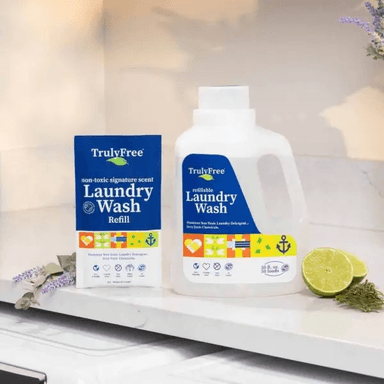
If you've been meaning to bring Truly Free Home into your laundry, this is the easiest way to start: the whole kit, 60% off at $44.95 with free shipping.