FEATURED
YOUR EVERYDAY ESSENTIALS
ExPLORE
SUPPORT
DYE-FREE CLEANING
FEATURED
YOUR EVERYDAY ESSENTIALS
ExPLORE
SUPPORT
DYE-FREE CLEANING
If the blood stain is still wet or you caught it within the first few minutes, you're in a great spot. Fresh stains come out much easier than if they’re dried.
Start by holding the fabric under cold running water from the back side so you're pushing the blood out of the fibers rather than deeper into them. You'll be surprised how much comes out with just water alone.
Before you treat the blood stain, take a quick look at the care label. Most fabrics, like cotton, linen, and poly blends, can handle enzyme treatments and machine washing without any issues. Silk, wool, and anything labeled dry-clean-only will need a lighter touch.
Once you've flushed out what you can, spray the blood stain with a non-toxic stain remover and give it at least five minutes to work. Truly Free Home Laundry Stain Spray is always a good option here. Our formula uses three bio-based enzymes—including protease, which specifically targets protein-based stains like blood—to break things down at the molecular level.
If you prefer something more hands-on, wet the fabric and rub Truly Free Home Stain Stick directly onto the stain until you see a lather. It's made with pine oil terpene and saponified coconut and olive oils, so it works into the fibers without any of the harsh chemicals you'd find in most stain sticks at the store.
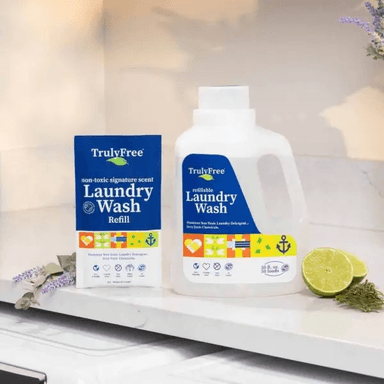
From there, wash the clothing in cold water with a gentle, non-toxic laundry wash—Truly Free Home Laundry Wash is a great option. Don’t forget to check the stain before you toss it in the dryer. If there's any trace left, the heat will lock it in permanently. If the blood stain is still showing up, simply re-treat it and run another cold wash. A second round is way better than a ruined shirt.
Dried blood is a different situation. The proteins have had time to bond with the fabric, so you'll need a little more patience and a soak to loosen things up.
Fill a sink or basin with cold water and mix in a couple scoops of your favorite non-toxic oxygen bleach powder like Truly Free Home OxyBoost. It's a sodium percarbonate oxygen bleach. If you’re wondering what that means, it essentially releases oxygen to lift stains without fading colors or weakening the fabric like chlorine bleach does.
Let the garment sit for a few hours at a minimum. Overnight is even better if the stain is old or has had plenty of time to set.
After soaking, go in with a non-toxic stain spray or stain stick on whatever remains. For the really stubborn spots, mix a scoop of a heavy-duty stain remover with enzymes—like Truly Free Home Enzyme Stain Remover—with a teaspoon of water to make a paste, apply it directly to the stain, and let it sit for five to 10 minutes.
The enzyme blend digests organic material naturally, which is exactly what you need when you're dealing with dried blood that's had time to settle in.
Wash your treated clothing in cold water with the laundry detergent, and once again, check before drying. You may need to repeat the whole process for older stains, but they should come out with persistence.

Here are a few common mistakes that will make blood stains worse, not better.
Hot water. Blood is a protein, and heat causes proteins to coagulate. That’s why we recommend cold water when trying to remove a blood stain, since it keeps things loose so the blood can actually be flushed out.
Rubbing the stain. This action may feel like you're doing something productive, but it pushes the blood deeper into the weave and spreads it outward. Blot or dab gently, and always work from the outside of the stain toward the center.
Using the dryer too early. If you put a stained garment through a heated dry cycle before the blood is completely gone, that stain is likely set for good. When in doubt, air-dry your garment and check the stain in natural light to make sure it’s completely gone before throwing it in the dryer.
Skip the chlorine bleach. Not only will bleach strip color and break down fibers over time, it’s highly toxic and can cause skin and eye irritation.
Cotton and polyester blends are the easiest to work with. They handle cold soaking, enzyme treatments, and machine washing without complaint. Denim can take some aggressive treatment, too, but the thickness of the fabric means blood can set deeper, so longer soak times with a product like OxyBoost will give you the best results.
Wool and silk are pickier. Stick to cold water flushing and gentle dabbing with a stain stick. Don't soak wool for extended periods, and always lay delicates flat to dry rather than wringing them out or putting them in the machine.
Blood contains hemoglobin, a protein that carries oxygen through the body. When it hits fabric, the hemoglobin starts to oxidize and bond with the fibers. The longer it sits, the tighter that bond gets. Heat speeds the whole process up dramatically, which is why warm water and dryers are a no-go when it comes to blood-stained clothes.
This is also why enzyme-based products work so well on blood specifically. Instead of bleaching the color away or using harsh chemical solvents to strip the blood stain, enzymes actually break down the protein structure itself. It's a more targeted approach, and it's a lot gentler on your clothes.