FEATURED
YOUR EVERYDAY ESSENTIALS
ExPLORE
SUPPORT
DYE-FREE CLEANING
FEATURED
YOUR EVERYDAY ESSENTIALS
ExPLORE
SUPPORT
DYE-FREE CLEANING
Kitchen sponges and dish rags were the germiest items in the NSF study, and it's not hard to understand why. These dishwashing staples pick up food particles, grease, and bacteria, then sit damp by the sink, where they breed colonies of coliform, yeast, and mold between uses.
Replace sponges weekly. Between swaps, microwave damp sponges for one minute to kill bacteria, or run them through a dishwasher cycle.
Dish rags should be swapped out every couple of days and washed in hot water. If you prefer plastic-free, eco-friendly options, try the Truly Free Home Non-Toxic Eco Sponge and Truly Free Home Organic Cotton Dish Towel.
Your kitchen drain and basin can harbor more bacteria than your toilet seat—a fact that surprises most people but has been consistently supported by germ studies. So, it’s important to ensure these areas are properly cleaned.
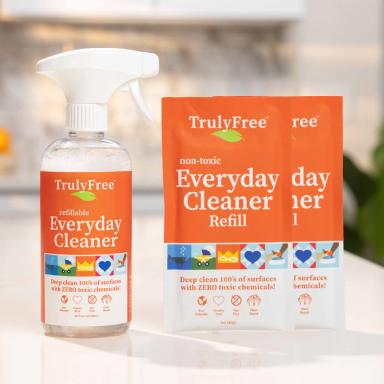
Wipe down the basin and faucet handles daily with a non-toxic cleaner. Once a week, pour baking soda followed by vinegar down the drain to break up buildup without corroding your plumbing. Truly Free Home Everyday Cleaner works on stainless steel, porcelain, and granite, so it's a good all-purpose option for keeping your entire sink area clean without bleach or ammonia.
The water reservoir in your coffee maker is dark, damp, and rarely cleaned, so it’s basically a dream environment for mold and yeast. The NSF study ranked it as the fifth germiest spot in the home, and most people never think to clean it beyond rinsing with water.
Run a cycle with equal parts white vinegar and water once a month, followed by two to three cycles of plain water to flush the vinegar out. Check your manufacturer's instructions for specific guidance, but the key is ensuring the water reservoir doesn’t go too many uses without a deep clean.
Here's one that catches people off guard. In the NSF study, the toothbrush holder ranked as the third germiest item overall and the dirtiest spot in the bathroom—beating out the toilet handle, the faucet, and even the toilet seat. When you think about it, it makes sense. Your mouth contains around 700 species of microbes, and every time you put a wet toothbrush back in its holder, you're transferring them to a small, enclosed space that rarely gets washed.
If it’s dishwasher safe, run your toothbrush holder through the dishwasher once or twice a week. If not, hand wash with hot water and a non-toxic dish soap like Truly Free Home Dish Soap. To keep bacteria from accumulating, let toothbrushes air dry upright rather than storing them in covered containers.

Bathroom counters collect moisture, toothpaste splatter, and product residue, which creates a film that bacteria cling to. Bath mats, meanwhile, stay damp for hours after every shower, and towels that get reused without drying fully between uses can start growing mold and bacteria faster than you'd think.
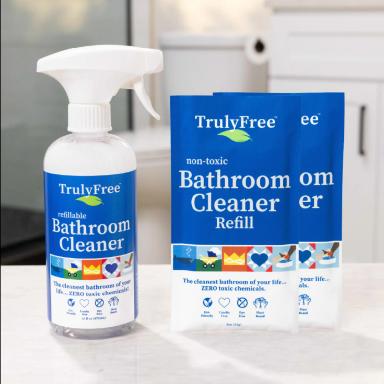
Wipe down bathroom counters daily with a non-toxic cleaner, like Truly Free Home Bathroom Cleaner, which uses citric acid to cut through buildup on counters, tile, and fixtures without harsh fumes. Wash bath mats weekly with a mild detergent and hang towels to dry completely between uses—if your towels smell musty, it's past due for a wash.
Pet food and water bowls ranked as the fourth germiest item in the NSF study. Think about it—food sometimes sits in those bowls for hours, saliva builds up in the water dish, and most people don't wash them nearly as often as their own dishes. But you should. Then there are pet toys. Rubber or rope toys that get chewed and slobbered on are especially big germ magnets that need to be cleaned routinely.
Wash pet bowls daily with hot soapy water, just like you would your own plates. Or, if they’re machine-washable, throw them in the dishwasher. Rubber and plastic toys can be cleaned with a non-toxic dish soap and warm water. Fabric toys should go through the washing machine regularly. Avoid using bleach or toxic chemical cleaners on anything your pet puts in their mouth.
Door handles, cabinet pulls, light switches, and stove knobs get touched dozens of times a day by every person in the household, often with unwashed hands. The NSF study found coliform bacteria on kitchen faucet handles in multiple homes, and stove knobs made the top 10 germiest list. Oftentimes, these surfaces don't look dirty, which is exactly why they get skipped during routine cleaning.
Wipe down high-touch surfaces a few times a week with a non-toxic multi-surface cleaner. Stove knobs can be removed and washed in hot, soapy water weekly. This is another spot where Truly Free Home Everyday Cleaner comes in handy. A quick spray and wipe on handles, switches, and knobs keeps things under control without leaving behind toxic residue on the surfaces your family constantly touches.
Remotes, phones, tablets, and game controllers travel between hands, couch cushions, kitchen counters, and sometimes even the bathroom. The NSF study found yeast, mold, and even Staphylococcus on remote controls and video game controllers. And because electronics can't be submerged or sprayed directly, they tend to go months without a proper cleaning.
Wipe remotes and controllers down weekly with a lightly dampened cloth. For phones and tablets, a microfiber cloth with a small amount of non-toxic cleaner works well. Just avoid spraying directly onto screens or ports—always spray onto the cloth first.
The germiest spots in your home aren't always the ones that look dirty—they're the ones that stay warm, damp, or get touched constantly without ever being cleaned. The good news is tackling them doesn't take much time or effort, and you definitely don't need bleach or toxin-heavy products to do it. A solid lineup of plant-powered, non-toxic cleaners handles every high-traffic area on this list while keeping your home safe for kids, pets, and everyone in between.