FEATURED
YOUR EVERYDAY ESSENTIALS
ExPLORE
SUPPORT
DYE-FREE CLEANING
FEATURED
YOUR EVERYDAY ESSENTIALS
ExPLORE
SUPPORT
DYE-FREE CLEANING
If you find mold in your home, your first instinct might be to grab a sponge and start scrubbing. Resist that urge. There are specific steps you need to take to ensure you stay safe, to prevent mold spores from spreading, and to understand what’s causing mold growth in the first place.
Disturbing mold without precautions sends spores airborne—spreading a one-corner problem into the whole room. Instead of jumping into action, simply take note of where the mold is and how much there is.
Mold doesn't show up randomly; it needs water to grow and thrive. When you find mold, check for leaky pipes, condensation around windows, and water stains on ceilings that could be contributing to growth.
The Minnesota Department of Health lists common culprits: roof leaks, high bathroom humidity, plumbing issues, and basement flooding.
Before you do anything else, make sure you’re wearing the proper gear for mold removal. The CDC recommends an N95 respirator, non-latex gloves, and sealed goggles at a minimum. If you have asthma, allergies, or a compromised immune system, don't clean mold yourself.

Most health departments don't recommend testing for mold in your house. The Minnesota Department of Health explains: testing is expensive, there's no standard for "safe" mold levels, and any indoor mold is a problem regardless of type.
Instead, trust your senses. Mold can look like fuzzy, discolored, or slimy patches, and it often smells musty and earthy. If you’re worried there may be mold in your house, start by checking the bathroom, under sinks, around windows, in basements, behind furniture on exterior walls, and anywhere you've noticed water stains or lingering moisture.
If your nose says mold but your eyes can't find it, look behind things. The EPA notes mold can hide beneath carpet, behind wallpaper, and even inside walls.
An important note: while you may read that bleach is recommended for mold removal, the EPA does not recommend bleach as routine practice for mold cleanup. Their guidance? Scrub mold off hard surfaces with detergent and water, then dry the area completely. The goal is physical removal. Even dead mold can trigger allergic reactions.
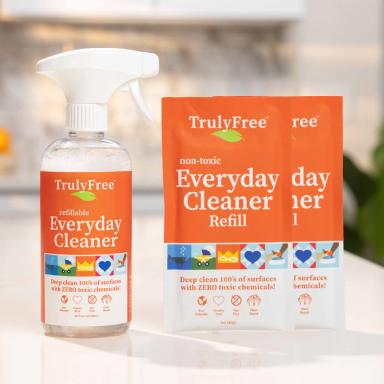
For anything under 10 square feet (roughly 3 ft. by 3 ft.), you can handle home mold removal yourself. A non-toxic cleaner like the Truly Free Home Everyday Cleaner works well on hard, non-porous surfaces—without introducing harsh chemicals when you're already dealing with an air quality concern. Here’s how to safely remove mold in areas where it commonly shows up in homes. Remember to always wear the right safety gear before treating mold yourself.
Spray the affected area with a cleaner or detergent solution. Let it sit for a few minutes, then scrub with a stiff brush, rinse, and dry completely. Prevent recurrence by running your bathroom fan during and after showers.
Dampen (don’t soak) a cloth with a non-toxic cleaner. Work gently—drywall scratches easily. If the wall feels soft or crumbly, the mold has penetrated through, and that section needs professional replacement. And never paint over mold—the EPA warns it will peel.
Small leaks go unnoticed for weeks—creating a perfect mold habitat. Clean hard surfaces with a non-toxic cleaner and water. Replace porous materials like particleboard shelving that have absorbed moisture.
Condensation feeds mold on sills and frames, especially in winter. Wipe clean, dry thoroughly, and improve airflow or invest in a dehumidifier. The Minnesota Department of Health recommends keeping indoor humidity between 20–40% in winter and below 60% the rest of the year.
Mold grows deep into carpet fibers, padding, and insulation. The EPA is clear: porous materials may need to be thrown away if they become moldy, because cleaning can't reach what's embedded inside.

According to the EPA, call a professional for home mold remediation if the area exceeds 10 square feet, it was caused by contaminated water, you suspect mold in your HVAC system, it keeps returning, or someone in the household has a health condition that makes exposure risky.
Ask contractors for references and verify mold-specific experience. No state or federal agency licenses mold remediation professionals, so do your homework before hiring anyone.
According to Harvard Health, mold exposure can cause inflammation along the respiratory tract. Common symptoms include coughing, runny nose, itchy eyes, sneezing, and wheezing. People with allergies or asthma may react more severely, and children and immunocompromised individuals are especially vulnerable.
A telling sign: if symptoms improve when you leave the house and return when you come back, mold could be the cause, and you should talk to your doctor as soon as you can.
Don't wait. Mold damages what it grows on, and the longer it grows, the worse it gets. A small spot on a bathroom ceiling can quickly spread into walls, compromise your home's structure, and create ongoing air quality problems.
Even worse, prolonged mold exposure is associated with cognitive difficulties, immune disruption, and increased depression and anxiety.
The good news? Most household mold problems are manageable if you catch them early. So if you find mold in your house, find the moisture source and fix it, clean the surface, keep an eye on things, and consult a professional if it doesn’t go away.
Your home should be where your family feels safe. Don't let mold take that away.